Photo Credit: James McPherson
Constructing a Leading Future by ‘Doing What’s Right’
Building Its Lasting Foundation on Its Reputation for Quality, Relationships, and a Straightforward Philosophy
For LBA Construction Group, growth has never simply been about becoming bigger. Over more than four decades, the Melbourne-based construction company has expanded by remaining focused on the qualities that defined it from the beginning: technical capability, craftsmanship, trusted relationships and an unwavering commitment to delivering exceptional projects.
The company commenced operations in 1985 as a two-person business founded by Len Bogatin and his business partner, Denis Mathieson. Len had completed the Bachelor of Construction degree at Melbourne University, majoring in quantity surveying, before gaining experience in the Public Works Department of state government and private development. Eventually, the two decided to establish their own company from the front room of Len’s home.
“We commenced the construction company in 1985, which was pretty much a one- or two-person company at the time,” Bogatin said.
The original ambition was to concentrate on high-end architectural residential construction, a specialty that remains at the heart of LBA today. While developing the company, and completing a Graduate Diploma in Project Management, Bogatin also became a lecturer within Deakin University’s Architecture and Construction faculty in Geelong, teaching for approximately 15 years.
That connection to education was an unexpected part of LBA’s growth story. The company began employing talented undergraduates and graduates, steadily building its workforce and technical capability.
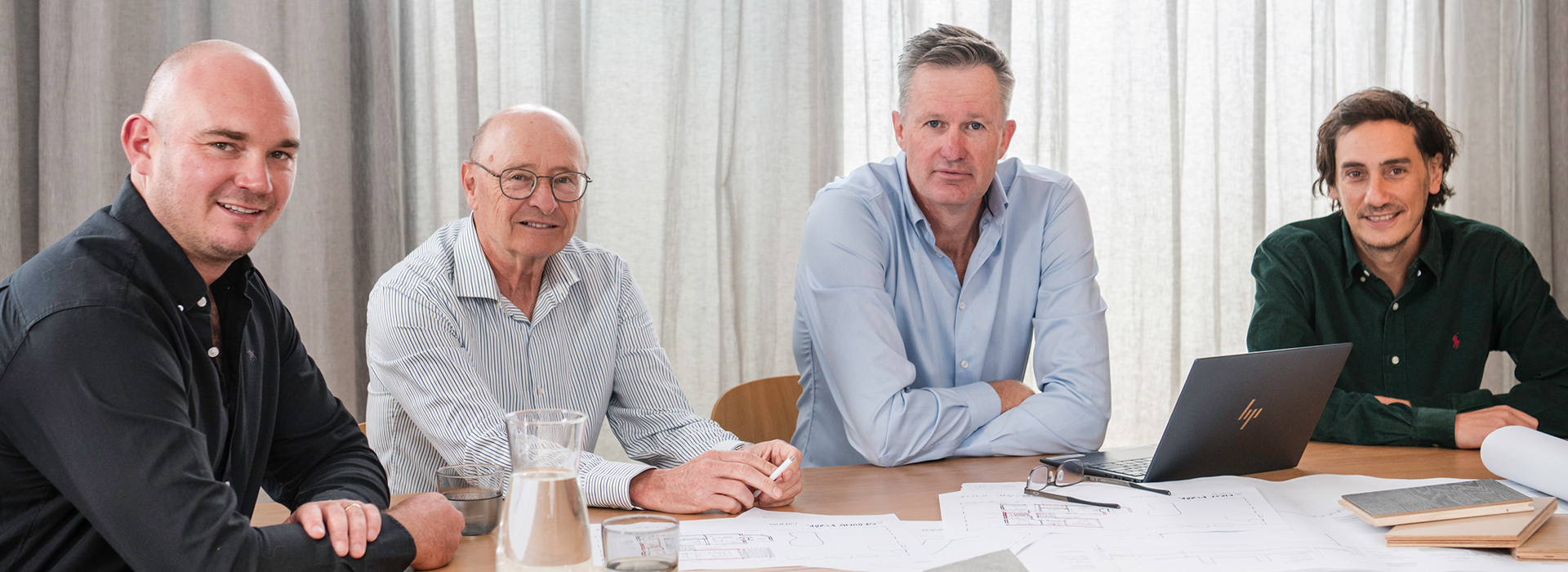
Today, LBA has four Directors: Len, Simon Mathieson (Denis’s son and one of the original employees of LBA when a student studying for his construction degree at Deakin University), Adam Bogatin (Len’s son with a degree in Commerce) and David Burgess (recently elevated to directorship having started at LBA as a third year carpenter with a degree in construction). LBA employs approximately 80 people operating across high-end residential construction alongside selected bespoke commercial projects.
“We do a variety of work, mainly still high-end residential,” Bogatin said. “Bespoke homes and renovations. If it’s detailed and complex, we’re very good at it.”
Complexity as a Specialty
Approximately 90 percent of LBA’s work remains high-end residential, with its major construction division typically carrying between 10 and 15 projects at a time. Those numbers, however, tell only part of the story. Individual projects can be exceptionally substantial, detailed and technically challenging.
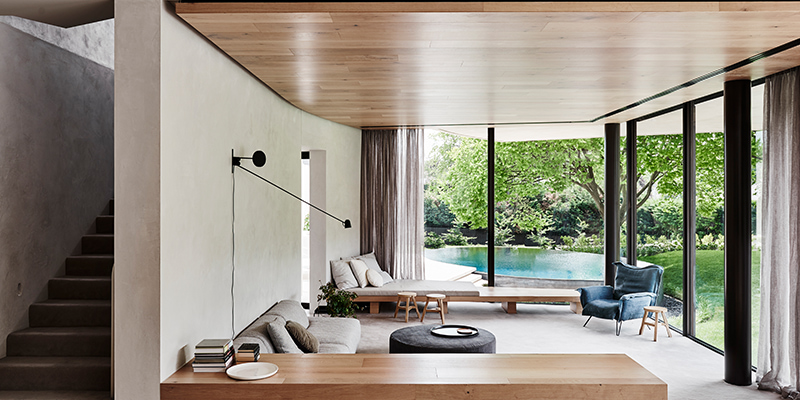
Photo Credit: Lisa Cohen
The portfolio ranges from contemporary inner-suburban architectural homes to rural estates incorporating extensive landscaping, roads, dams, vineyards and infrastructure. Other assignments involve major renovations to significant period homes, where extraordinary engineering can be required to accommodate modern lifestyles while protecting existing architecture.
One increasingly prominent example is the construction of large basements beneath existing homes. LBA can be required to support an established residence while creating substantial new underground spaces incorporating wellness facilities, commercial kitchens, lifts and other amenities, before completing extensive renovations above.
The company also undertakes architectural commercial construction, often for existing clients whose relationship with LBA began through residential work. That has included offices, restaurants, schools and museums, allowing the business to apply its bespoke construction capabilities beyond the residential market.
Regardless of sector, the common denominator is complexity and quality.
“There are talented and motivated construction personnel that come and work with us or want us to work for them [because] they understand the quality,” Adam Bogatin, Director, said. “They want to be a part of delivering legacy builds.”
A Culture of Doing What’s Right
Despite its expansion, LBA continues to operate according to a remarkably simple principle.
“Do what’s right,” Adam Bogatin said. “I think a lot of the people come back to us because we do what’s right. It’s about honesty, integrity. It’s about making our clients happy and making sure that they come back and recommend us.”
Until recently, the company operated without a dedicated marketing function, making repeat business, referrals and recommendations particularly important. Relationships with architects, clients and trades have therefore played a defining role in LBA’s evolution.
Internally, the same philosophy applies. The company emphasizes respect rather than hierarchy, creating an environment where people from across the organization are encouraged to contribute.
“We treat everyone with a lot of respect,” Adam Bogatin said. “There’s no difference. There’s no hierarchy in our business. Everyone gets treated equally.”
That approach extends to architects, consultants and subcontractors. After more than 40 years in construction, LBA has developed, and continues to develop, an extensive network of trusted design and engineering professionals and trades, who understand the standards expected on its projects. Rather than seeing our stakeholders as isolated components, LBA encourages collaboration, communication, and collective responsibility for the finished product.
“We have regular onsite meetings, review processes, and undertake continued detailed planning,” Bogatin said. “Our trades and stakeholders enjoy working with us because we listen to them and they listen to us. – clear communication is paramount in construction.
Investing Before Construction Begins
Delivering increasingly sophisticated projects requires significant investment behind the scenes. LBA has expanded its people, quality assurance, project oversight, pre-construction capabilities, and technology.
A full-time quality assurance manager was introduced within the past year, while three construction managers provide additional oversight. Every major project has a full-time site manager along with project management and contract administration resources, with larger projects receiving additional personnel.
Particularly important is the company’s pre-commencement team, which analyzes projects extensively before major construction activity begins. Risk reviews, programming, logistics and design issues can therefore be addressed early rather than becoming costly problems later.
“We do a lot of the work up front before we actually get onto site,” Adam Bogatin said. “We solve a lot of issues. We run risk, financial, value management, programming and logistic reviews at tender time and pre construction commencement”,
Technology supports that structure. LBA has moved heavily toward digital processes, using platforms including Procore across its projects and Australian software ProcurePro for subcontracting and related processes.
At the same time, investment in people remains fundamental. LBA’s workforce combines carpenters who have progressed into management with architects, construction managers and professionals who have worked within larger Tier One construction environments.
Some employees have left LBA to broaden their experience elsewhere before ultimately returning, bringing additional knowledge back into the organization.
“We welcome with open arms those coming into our company that can offer experience and direction and technical advice from various other sectors of the construction industry,” Bogatin said.
Navigating a Changing Industry
Australia’s construction sector continues to present challenges, particularly as businesses navigate regulatory changes, insurance requirements, permit processes and evolving construction standards.
LBA sees these external pressures as an ongoing management challenge, requiring continual education and investment.
“Australia is also pretty stringent around the standards and national construction codes,” Adam Bogatin said. “We spend a lot of time internally either training staff or employing staff to be able to keep up with that and understand what the changes are.”
Experience provides an important advantage. By combining rigorous preparation with knowledgeable employees and detailed project oversight, LBA aims to enter construction with what Adam Bogatin describes as its “eyes wide open.”
The company is equally selective about opportunities. Growth for growth’s sake is not the objective. Projects must align with LBA’s capabilities, culture, quality expectations and risk profile.
“The key aim is always to produce projects at an exceptional level,” Adam Bogatin said. “We make sure we’re doing the right projects for our business, so we’re not out there chasing projects that we don’t think fit within what we do well.”
Creating Opportunities from Within
Although LBA remains careful about expansion, it actively encourages innovation from within its workforce. Board and Strategic meetings are held through the year with an external chairman and the company’s Directors. We solve many issues here, including running risk reviews and spending time programming and planning logistics. Separate to that we also assess the industry, future priorities and opportunities for employees.
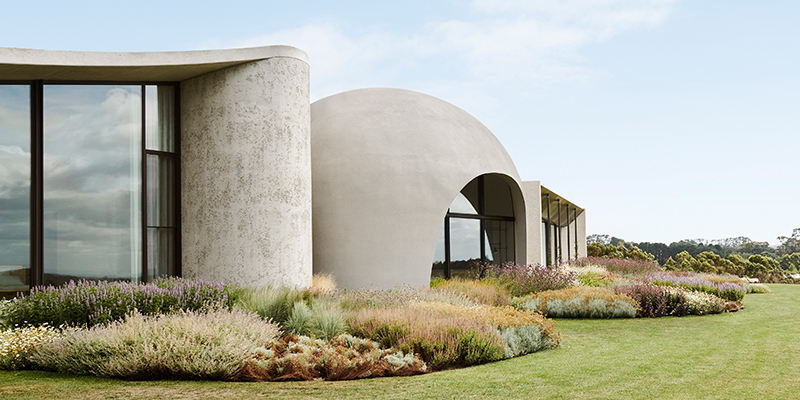
Photo Credit: Lisa Cohen
When staff identify potential new business areas that complement LBA’s expertise and culture, they are given room to investigate and develop those opportunities. The company’s enhanced quality assurance program grew partly from ideas presented by long-serving employees.
“If staff (be they on site or off site) come up with an idea and we think it has merit, we give them the road to investigate that,” Len said. “If they have growth and we have growth, then we’re all for that.”
That philosophy is also reflected in LBA’s evolving ownership structure. The company now has four equity partners or directors representing different generations and professional backgrounds, including construction, project management, business, quantity surveying and carpentry.
It creates both continuity and succession while potentially opening a pathway for others to become owners in the future.
Still a Family Business
For all its systems, sophisticated projects and approximately 80 employees, LBA retains the character of a family company.
The next generation has gradually taken greater responsibility, while new leaders have earned opportunities to participate in ownership. Even Len Bogatin’s wife remains connected to the practical side of the company, regularly putting on high-vis clothing and working as a labourer onsite.
The anecdote captures something deeper about LBA: despite its growth, construction remains personal.
The company’s future will continue to involve new projects, technology, people and opportunities, but its leadership does not intend to sacrifice the culture that carried it from a front room in 1985 to the complex projects it delivers today.
“We’ve always been flexible, innovative, and encouraging of innovation,” Len Bogatin said.
For LBA Construction Group, that flexibility sits alongside something far more constant. The company wants its people, trades, architects, and clients working toward the same outcome: creating something exceptional and taking pride in the process of building it. After more than four decades, that combination of craftsmanship, care and trust remains the foundation upon which LBA continues to build.
AT A GLANCE
Who: LBA Construction Group
What: A construction company specializing primarily in high-end architectural residential projects alongside bespoke commercial construction.
Where: Victoria, Australia.
Website: www.lbaconstruction.com.au
PREFERRED VENDORS/PARTNERS

Exquiste Painters – www.exquisitepainters.com.au