
Small but Strong
This Leading Health Organization Is Focused on Ensuring High-Quality Healthcare Remains Close to Home for Generations to Come.
For West Otago Health, being small has never meant thinking small. Serving a rural community of roughly 2,200 people, the organisation represents something increasingly valuable in healthcare: a locally owned service designed specifically around the people who depend upon it. From general practice and aged care to district nursing and after-hours emergency care, West Otago Health has built an integrated model with community at its centre.
That mission has remained remarkably consistent since the organisation opened its facility in 2014. What has changed is the scale and complexity required to sustain it.
“Our purpose, the charitable purpose or the reason we exist, is to provide for the healthcare needs of the people of West Otago,” Chair Allister Boddy said. “We do that right across the full suite of requirements from the medical centre, general practice to aged care, to district nursing, to after-hours emergency care.”
The challenge today is ensuring that model remains viable for decades to come.
Investing in Long-Term Viability
One of the most significant milestones since West Otago Health was previously profiled has been a $1.9 million extension to its aged care facility, completed in 2023.
The original operation opened with 14 aged care rooms, a scale that presented challenges because many essential costs remained fixed regardless of occupancy. The expansion added six rooms along with additional lounge and consulting space, bringing the facility to 19 available rooms.
For Boddy, the project was as much an investment in sustainability as additional capacity.
“With the existing 14 rooms, we had the fixed cost of the kitchen, the fixed cost of having a registered nurse on the floor 24 hours a day,” Boddy said. “With the expansion, those things stay the same, but we’re able to spread that cost over a larger number of rooms.”
The result has been improved economies of scale and a stronger aged care operation, allowing staffing support to respond more efficiently to occupancy.
“It’s been critically important to have that extension done,” Boddy said. “Our viability would probably be pretty challenged if we hadn’t taken that step three years ago.”
Yet growth has not changed the character of the home. General Manager Karen McCutcheon believes its intimate scale remains one of West Otago Health’s greatest advantages.
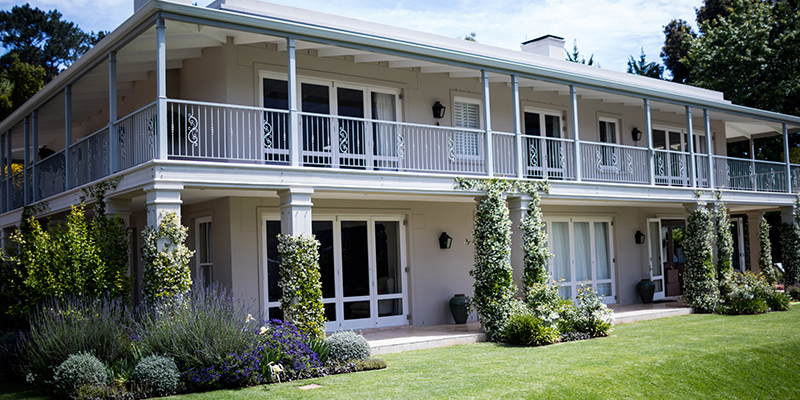
“We know every resident, we know what’s wrong with all of them. We know who their families are, what the connections to the community were and what they used to do for a living,” McCutcheon said. “By keeping it nice and small, I feel like we actually give that true feeling of being a home rather than a facility.”
Small Enough to Act
That community focus is perhaps best illustrated by a recent investment that was never primarily about financial return.
When a resident began wandering, West Otago Health faced the possibility of having to transfer her to a dementia unit outside the region. Instead, the organisation invested $33,000 in a specialised door alarm system.
The resident could wear a pendant connected to the system without restricting the freedom of others. The solution allowed her to remain close to her husband and community while maintaining her safety and dignity.
“It was an absolutely major cost for us, but to support her and keep her safe and keep her dignity and everything like that, and to be able to remain in our home, it was priceless, really,” McCutcheon said.
Unable to find a suitable system in New Zealand, McCutcheon sourced one from Australia and had it operating within approximately five weeks.
For Boddy, the speed of that decision demonstrated the strength of local governance.
“When that decision came to us, we rolled that out fairly within days, basically, of the issue being identified,” Boddy said. “Whilst we are focused on viability, we want to do the best for our people too.”
Although the resident has since passed away, the system remains available for others experiencing wandering or temporary confusion associated with illness.
The Rural Workforce Challenge
West Otago Health has enjoyed considerable stability within its aged care workforce. Some employees have remained with the organisation since its earliest days, turnover is low and McCutcheon regularly receives inquiries from registered nurses and carers interested in joining the team.
The medical centre presents a different challenge.

Practice nurses are more difficult to source, while recruiting general practitioners remains the organisation’s most significant workforce vulnerability.
West Otago Health’s previous GP remained for 14 years, an unusually long tenure in a small rural practice. Recruiting a successor has taken considerable time, although the organisation secured a new GP due to begin in September.
“Replacing a GP, which is something we’re in the middle of at the moment, has been a challenge for the past year because our previous GP had stayed on for 14 years,” McCutcheon said.
Compared with rural practices that can spend years searching for permanent doctors, West Otago Health attracted two interested candidates within six months. Nevertheless, overseas recruitment can involve approximately six months of processing.
“It’ll be the largest risk we face as a business, GP recruitment,” Boddy said. “Single largest risk.”
Planning Rather Than Reacting
Financial discipline sits behind the organisation’s ability to make community-focused decisions.
Its active local board maintains close oversight of forecasting, budgets and financial performance, with Finance Manager Julia Boddy and the finance group playing central roles in maintaining that discipline.
“We plan our way into viability rather than just waiting and letting things happen,” Boddy said.
That approach has become particularly important amid uncertainty surrounding government-funded healthcare contracts. Many contracts remain short-term, limiting the organisation’s ability to predict future funding increases with certainty.
Approximately 95 percent of West Otago Health’s income currently comes through commissioning agents on behalf of government. Diversifying that exposure is therefore part of the long-term conversation.
“We will continue to investigate other options to improve viability for the whole business,” Boddy said. “That might mean investing in things or income streams that aren’t nationally funded or don’t come from central government.”
One potential avenue is already emerging. West Otago Health has acquired an additional hectare beside its existing four-hectare campus and is investigating opportunities for independent living or retirement housing.
The organisation has been visiting other villages and gathering information, with the intention of developing a clearer plan. Whatever emerges, Boddy stressed that expansion will be carefully considered.
“Anything we do has to be aimed at improving the overall viability of the whole business,” Boddy said. “If it doesn’t tick those boxes, then we won’t go there.”
Technology with a Human Purpose
Digitalisation has gradually changed daily operations, including online patient and medication management systems, paperless processes and increased telehealth.
West Otago Health has also moved to a national IT provider, bringing greater emphasis to cybersecurity and targeted staff education.
But McCutcheon sees some of technology’s greatest potential in improving access to rural medicine.
Point-of-care testing, for example, could allow clinicians to perform more diagnostics locally, potentially preventing unnecessary hospital visits. Expanded telehealth could similarly reduce the burden of travelling between West Otago and larger centres.
“For us, say, travel for a specialist appointment, we’re looking at roughly an hour and a half to two hours travel,” McCutcheon said.
Her vision is not simply a patient speaking remotely to a specialist. It is about retaining the local relationships that give patients confidence during difficult moments.
“Having really good telehealth facilities where a specialist could be sitting in Dunedin and talk to somebody about their renal cancer diagnosis, and that patient could actually be sitting with a nurse or the GP that they know and trust, that’s promising to me,” McCutcheon said.
The New Zealand Government’s increased focus on rural health also gives West Otago Health reason for optimism, particularly if that attention translates into additional resources and greater ability to deliver care locally.
Recognition for a Community Model
In October 2025, West Otago Health received national recognition when its aged care operation won the Life Care Small Property Award for New Zealand.
For a small, community-owned organisation, the accolade carried particular meaning.
“Being recognised as the best little rest home in New Zealand, that’s a pretty cool accolade for us and one we’re really, really proud of,” McCutcheon said. “Small is our strength.”
That strength ultimately belongs to more than the organisation itself.
West Otago Health was kickstarted through an extraordinary community fundraising effort that generated $5.5 million from a population of only around 2,200. Volunteers continue to serve on its board, support residents, help with appointments and contribute practical expertise throughout the operation.

“This is the community’s facility; it’s not for profit, there’s no big corporate clipping the ticket, it’s for our community, so everything we do has them in mind,” Boddy said.
That philosophy provides a clear definition of success for the next five years: retain staff, maintain a permanent GP and fully staffed clinical services, keep infrastructure in excellent condition, protect financial sustainability and continue finding new ways to provide healthcare close to home.
West Otago Health may be small, but that intimacy gives it something much larger organisations can struggle to reproduce: an ability to know its people, respond quickly and make decisions with a single community firmly in mind.
AT A GLANCE
Who: West Otago Health / Ribbonwood Country Home
What: A community-owned, not-for-profit healthcare organisation providing general practice, aged care, district nursing and after-hours emergency care.
Where: West Otago, New Zealand.
Website: www.wohealth.co.nz/ribbonwood
PREFERRED VENDORS/PARTNERS

Oakley Grey Architects – www.oakleygray.co.nz
Oakley Gray Architects have significant experience in designing for the elderly, having completed over 1,000 bedrooms over the last 30 years across all facets of aged care facilities. These range from independent and assisted living units through to masterplanning, resthome, hospital, and dementia facilities.