A Hospitality Success Story
Welcoming Guests at the Intersection of Sports and Entertainment Favorites That Still Feels Like Home
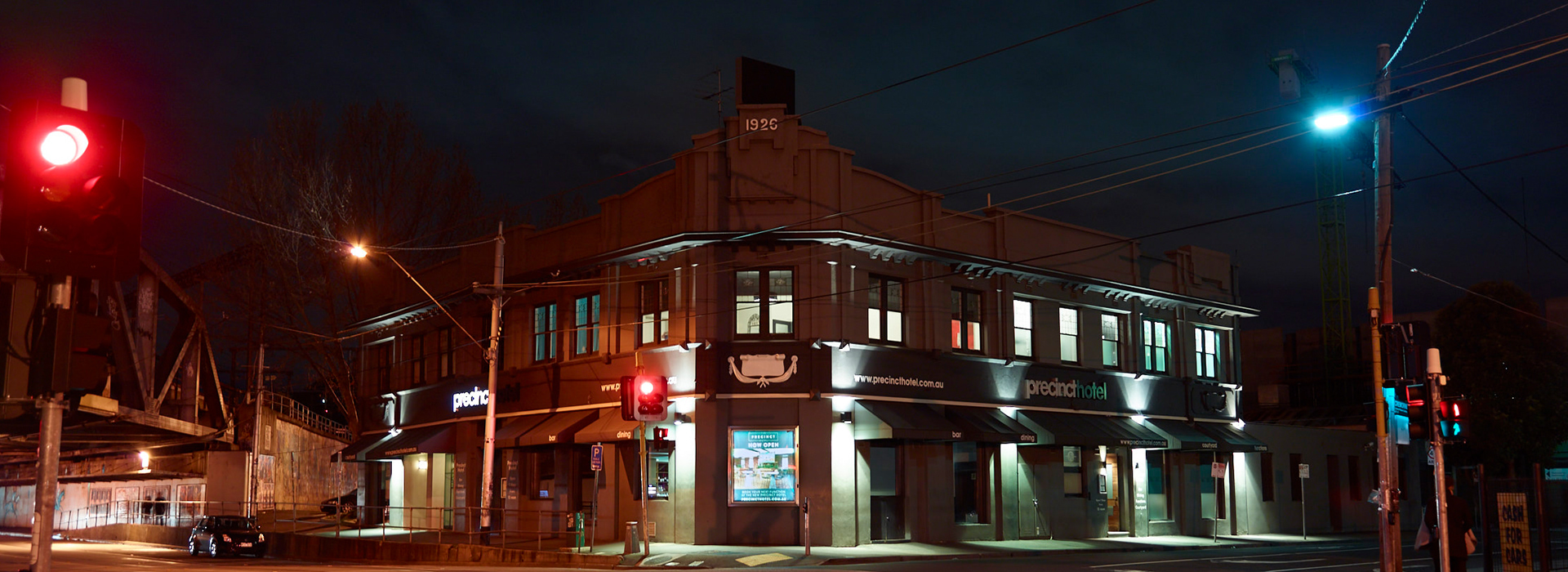
Few hospitality businesses can claim a location as closely connected to the rhythm of a city as Precinct Hotel. Positioned within easy reach of the MCG, Rod Laver Arena, AAMI Park and Margaret Court Arena, the Richmond venue sits at the centre of one of Melbourne’s most important sporting and entertainment districts.
The building itself has a history extending well beyond its current identity. According to Adam Smith, who has been involved with the venue since approximately 2012, it was previously known as the Greyhound Hotel and later the Depot before Precinct Hotel was established around 2010.
A significant cosmetic renovation followed in 2015, refreshing a venue that had experienced five busy years of trading. Since then, Precinct has continued evolving in response to changing customer expectations, economic conditions and, significantly, the disruption created by COVID-19.
Smith recalls that the pandemic particularly affected younger customers who missed formative years of socialisation, contributing to changes in the traditional late-night market. At the same time, COVID accelerated the venue’s adoption of technology and encouraged management to reconsider how hospitality could be delivered more efficiently.
Throughout those changes, one advantage has remained constant: location.
“We’re a stone’s throw away from MCG, Rod Laver Arena, AAMI Park, Margaret Court,” Smith said. “A lot of hospitality and tourism is attracted to and happens in that area, in that precinct.”
That proximity means the local event calendar effectively becomes Precinct Hotel’s operational calendar, influencing forecasting, rostering and preparation for the week ahead.
Built for the Big Occasion
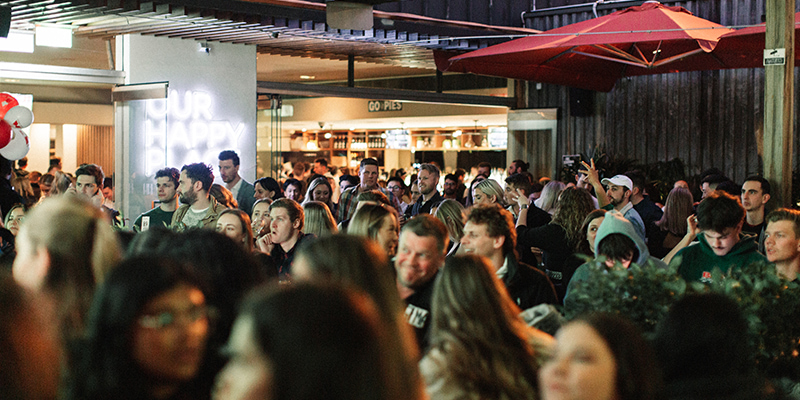
Precinct’s defining capability is its ability to handle exceptionally high customer volumes within compressed periods of time.
Smith points to the State of Origin at the MCG as an example. With approximately 96,000 people attending the game, demand at one of the closest major pubs to the stadium was inevitably substantial.
Customers arrive wanting drinks, dinner and a positive pre-game experience, often with thousands of other fans doing the same thing. Precinct’s challenge is therefore not simply attracting customers, but delivering consistent hospitality when the building is at its busiest.
“For us to be able to capitalise on that, but also ensure people have a really good experience, even though it’s busy, they still efficiently get their food and they have a really good time while they are here, is pretty critical for us,” Smith said.
Preparation is fundamental. Management considers how ordering can be streamlined, how service periods can be structured and how staff can be deployed so that volume does not undermine the customer experience.
“For me, nothing is stressful if we’re organised,” Smith said. “We can be as busy as we possibly can, but if we are organised, we’re well planned, and we’re structured, and we’ve got the human resources behind us to make sure we’re ready to hit the ground running, then it doesn’t matter how busy or for how long service is.”
That institutional knowledge is strengthened by long-serving employees, including senior team members who understand the peaks and troughs of Precinct’s highly event-driven business.
Making Service the Difference
Melbourne offers customers an extraordinary range of hospitality choices, and Smith readily acknowledges that many pubs surrounding Precinct can provide comparable food and a cold beer. The opportunity to differentiate, therefore, lies in service.
Over the past year, the venue has placed particular emphasis on defining what excellent service means at Precinct.
“If you were to walk in the door, there’s a friendly face there to say, ‘ Hi, how are you? How can we help?” Smith said.
Delivering that standard to a quiet room and delivering it when approximately 600 people want to eat before an event require different approaches. Precinct has consequently developed separate on-peak and off-peak service standards.
Its approximately 40-seat dining room retains dedicated table service, while the wider venue follows a model designed for efficiency during major events. Dedicated hosts welcome customers, help them find seating, and explain how ordering works.
Technology complements rather than entirely replaces human interaction. QR codes introduced following COVID are primarily used for food ordering, enabling customers to sit down and place an order immediately instead of joining a lengthy queue.
The system can also communicate kitchen wait times and menu information directly. Customers can then approach the bar for drinks, where personal interaction remains important, whether asking for a wine recommendation or discussing available offers.
For Smith, the combination provides reassurance and efficiency without abandoning hospitality.
“The information part and making sure people understand the process and what to expect while they’re with us is pretty critical,” Smith said.
The model also removes a bottleneck that previously occurred when food orders were concentrated through a single point of sale. When hundreds of customers arrive at roughly the same time with a game beginning 90 minutes later, every saved minute matters.
A Culture Behind the Customer Experience
Precinct Hotel employs approximately 30 to 35 people, the majority casual, and Smith sees workplace culture as essential to retaining strong employees in an industry where people have numerous employment options.
“Culture plays a massive part in retention of good staff and ensuring they feel valued and they feel like they have a voice,” Smith said.
Rather than concentrating solely on hospitality experience when recruiting, Precinct values initiative, attitude and proactive behaviour. Technical aspects of hospitality can be taught; the willingness to learn, engage customers and contribute to the team can be harder to develop.
That philosophy has produced standout employees who arrived without previous hospitality experience.
Supporting them requires structured training. Precinct continually reviews its induction process and teaches new employees not only how its on-peak and off-peak service models operate, but why they are necessary.
“If we’re asking staff to deliver on A, B and C, how are we actually making sure they feel confident and they can do this?” Smith said.

Management remains visible during the venue’s most demanding periods. On major AFL nights or events such as State of Origin, managers work alongside their teams in the dining room, behind the bar and on the pass.
“It’s not just more so, hey, this is what we want you to do. We’re going to sit up in the office, watch your cameras, make sure everything goes well,” Smith said. “It’s not how we operate.”
That hands-on approach allows managers to support employees while providing practical development in real service situations.
Sport at the Centre
Precinct Hotel is part of Red Rock Leisure, with a number of food and beverage supplier arrangements negotiated at group level. At venue level, however, partnerships and activations are considered according to how effectively they complement the Precinct brand.
Sport remains the natural connection.
The venue has pursued partnerships around major sporting events, including support for World Cup screenings, UFC activations and an official after-party following a Netball Grand Final. Other promotions have combined hospitality partners with special food experiences.
“For me, it’s about looking at what the events are and what’s going to be the best partnership of relevance,” Smith said.
The objective is to create additional value for customers while ensuring commercial partners also benefit from their investment.
Sport is not simply another programming category. It defines Precinct’s busiest period, particularly between March and September as AFL and rugby league generate enormous traffic through the surrounding precinct. Grand Final Day is the hotel’s standout occasion, while Anzac Day is another major trading day because of games at both the MCG and AAMI Park.
“We think we do sport as well as, if not better than, most other venues,” Smith said.
With seating for more than 300 people and the ability to accommodate much larger overall crowds, Precinct is already equipped for significant sporting audiences. The ambition is to strengthen that reputation further.
Preparing for a New Precinct
The next chapter could bring the most substantial physical transformation in years.
While Smith was unable to disclose detailed plans, discussions are underway around what could become a significant multi-level renovation. With the venue occupying what he considers one of Australia’s strongest hospitality locations, the opportunity is to reconsider the building and its offering around contemporary customer demand.
“I would like to think that within 12 months there’s something pretty substantial in the works,” Smith said.
Until then, considerable attention remains focused on maintaining the existing building and ensuring customers encounter a clean, comfortable and welcoming environment.
The longer-term renovation could also reinforce Precinct’s sporting identity. Smith sees an opportunity to improve the live-sport product and position the venue as an obvious destination whenever major games are being played.
“We want to make this sort of the first place people think of when it comes to anything live sport,” Smith said.
Growth, however, is not dependent solely on stadium crowds. The surrounding Cremorne and Richmond area has developed into a substantial business hub, allowing Precinct to build stronger weekday lunch and corporate trade. The venue currently offers local incentives Wednesday through Friday, with management focused on increasing awareness and engagement among nearby businesses.
At the same time, the team continues examining how to convert the enormous pre-event audience into stronger post-event trade through entertainment and experiences that encourage fans to return after games and concerts.
Across all those initiatives, the underlying objective remains remarkably straightforward: give people a reason to choose Precinct, enjoy their visit and return.
Service, technology, preparation and investment all support that goal, but the venue’s strongest asset may ultimately be the atmosphere created when Melbourne’s passion for sport converges on its doorstep.
“We want to continue to capitalise on that and make sure we can provide a great platform where people can come out and socialise, have a great experience, get a great service and enjoy a great product,” Smith said.
For a venue that has spent more than 15 years trading under the Precinct name, the future is about building upon precisely what its name suggests: its place at the heart of Melbourne’s sporting precinct.
AT A GLANCE
Who: Precinct Hotel
What: A high-volume hospitality and live-sport venue focused on food, drinks, events and pre- and post-game experiences.
Where: Richmond, Melbourne, Victoria, Australia.
Website: www.precincthotel.com.au