
Building the Voice for the Construction Sector From the Foundation Up
Collaboration, Better Regulation, Workforce Culture and Technological Progress Converge to Construct Australia’s Future.
Australia’s construction industry is much larger and more complex than the activity visible on a building site. Behind every completed home, commercial development and infrastructure project is an interconnected network of planners, architects, engineers, surveyors, trades, manufacturers, installers and other specialists.
Giving those voices a place in the national conversation is central to the Australian Construction Industry Forum (ACIF).
Chair Shannon Battisson describes ACIF as an unusual membership organisation because its members are themselves industry organisations. Having celebrated its 25th anniversary last year, the forum has 20 direct members, but through those organisations its reach extends to an estimated several hundred thousand individuals and businesses.
While some of Australia’s larger advocacy organisations primarily represent builders, constructors or property developers, ACIF focuses on bringing together the broader spectrum of professionals involved throughout the built environment lifecycle.
“ACIF represents absolutely everybody else in between, from the planners, architects, engineers, surveyors, electricians, fire installers, lift manufacturers and installers. Basically, the entire lifecycle, we like to say, of the built environment,” Battisson said.
That breadth is increasingly important as Australia faces what Battisson characterises as the dual crises of housing and climate. Increasing housing supply cannot simply be viewed as a matter of producing more dwellings. It also requires careful consideration of planning, density, infrastructure, quality, health, maintenance and long-term liveability.
The objective, therefore, must extend beyond building quickly. Australia must ensure that addressing today’s housing shortage does not inadvertently create tomorrow’s problems.
Building Consensus Across a Diverse Membership
Representing such a wide cross-section of the industry inevitably creates challenges when establishing common priorities. ACIF is currently undertaking a significant organisational review to ensure its direction reflects the issues that matter most to members.
Battisson identifies several themes at the centre of that work: creating a healthy and sustainable culture across the built environment, ensuring workers are supported through the industry’s modernisation, and encouraging legislation that enables a viable construction sector.
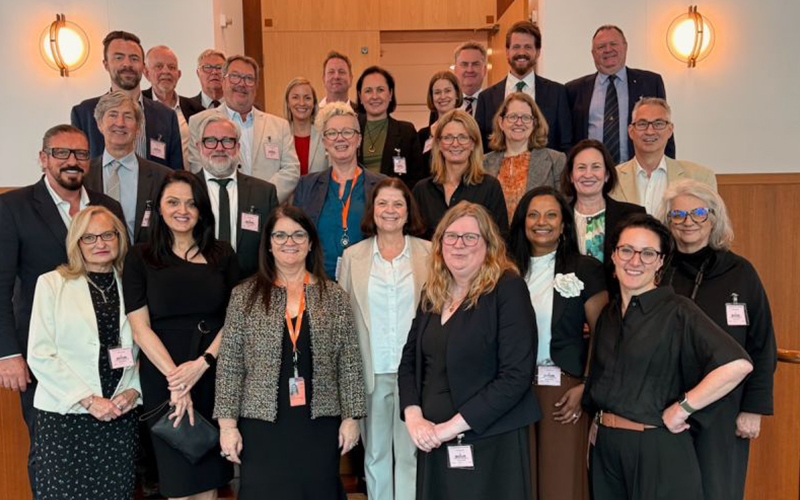
Member engagement is fundamental to that mission. ACIF traditionally holds four in-person member meetings annually in different parts of Australia, while members have voted to increase engagement through monthly virtual meetings. Digital communications complement those gatherings, but Battisson believes the opportunity for members to meet directly remains particularly valuable.
“One of the biggest values that members continue to see in their membership with ACIF is actually the community,” Battisson said.
That community encompasses organisations of dramatically different scales, from large institutes employing dozens of staff and representing thousands of businesses and individuals to specialist associations operated by a single person.
Bringing those organisations together creates opportunities to identify shared advocacy challenges and collaborate rather than addressing the same problems independently.
“When we offered to postpone or pause in-person meetings earlier in the year, members were incredibly passionate about not losing the chance to sit in the room with each other and really talk through the challenges that we all face,” Battisson said.
Regulation Without Sacrificing Safety
Few issues demonstrate the need for coordinated industry advocacy more clearly than regulation.
Australia is under enormous pressure to increase housing supply, creating political interest in removing perceived barriers to development. Battisson agrees that unnecessary roadblocks should be addressed and regulations should be easier to navigate, but warns against achieving speed by weakening safeguards.
Central to that discussion is the National Construction Code, which establishes baseline requirements for construction across Australia.
“The National Construction Code here is the single biggest risk mitigation piece of legislation that Australia has. It sets the base standard for any built piece of work in Australia, and it’s what protects the public from shoddy building or unsafe building practices,” Battisson said.
Battisson argues that Australia is already behind some international markets in adopting technologies and modern methods of construction, including prefabrication and modularisation. Dramatically reducing regulatory requirements could therefore make modernisation more difficult rather than accelerating it.
Another priority concerns access to Australian standards referenced by the National Construction Code. Those standards can sit behind a paywall, meaning people expected to comply with requirements may have to purchase access to the detailed standards governing their work.
ACIF has advocated strongly for free access to standards referenced by the code and has participated in discussions around how such a system could be implemented effectively.
Growth Meets a Workforce Reality
Demand exists across several areas of Australia’s built environment. Governments are concentrating heavily on housing while major infrastructure programs are also progressing, including preparations connected to the Brisbane Olympics and significant public transport investment.
Yet delivering those ambitions depends upon having enough skilled people.
Battisson points to shortages extending from traditional trades to professional disciplines such as architecture and surveying. One particularly striking example came from the Australian Capital Territory, where she says there were only three formal bricklaying apprentices despite brick veneer remaining common in Australian detached housing.
“There’s a massive need for growth in the skills that are required across the built environment and skills like right across the sector,” Battisson said.
Addressing that shortage requires stronger education and training capacity as well as a migration system capable of bringing necessary skills into Australia.
Recruitment alone, however, will not solve the problem. Battisson argues that construction must also become better at retaining the people it attracts.
Creating a Culture People Want to Join
Improving construction culture is therefore one of the industry’s most pressing priorities.
Battisson highlights diversity, workplace flexibility and continuing education as interconnected challenges. As sustainability requirements increase, workers must receive the education necessary to implement those higher standards successfully in practice.
“We can’t just update the legislation without then bringing the workforce on the journey with us, making sure that education happens and that people out on site are actually able to meet those new standards,” Battisson said.
ACIF member the National Association of Women in Construction has been particularly active in demonstrating how cultural improvements designed to support women can create better workplaces for everyone.
“The work that we’re doing to improve rates of diversity, for example, benefits everybody,” Battisson said.
For Battisson, the issue ultimately extends beyond increasing participation numbers. Construction workplaces must offer flexibility for modern families, provide satisfying careers and give people compelling reasons to remain in the sector.
Migration is another component. Australia needs systems capable of attracting workers with the right skills while providing them with meaningful and safe opportunities once they arrive.
Helping Small Businesses Modernise
Technology could help Australia address productivity and capacity challenges, but adoption remains uneven.
Battisson believes Australian construction has generally been slower to embrace new technologies than the industries she has experienced in Europe and the United States. One important reason is the structure of the Australian sector itself.
Many built environment businesses employ fewer than five people and are often family-operated. Owners and employees are already managing demanding workloads, leaving limited time or resources to research, learn and implement unfamiliar systems.
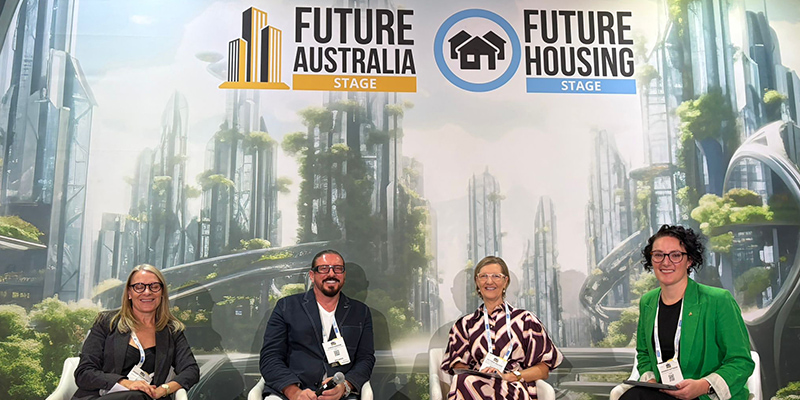
“In reality, when do we think people are going to find the time to learn these new technologies that could be making things much easier for us all?” Battisson said.
Upfront investment, ongoing costs and training can create significant barriers even when businesses recognise the potential value of modern technology.
Battisson nevertheless sees genuine enthusiasm across ACIF’s membership for modern technologies, new working practices and contemporary construction methods. Unlocking that enthusiasm will require meaningful support that allows smaller businesses to participate in the transformation rather than leaving modernisation primarily to larger organisations.
Preparing for the Next Era of Construction
Despite the scale of the challenges, Battisson is optimistic about the industry’s direction. Climate pressures, natural disasters, housing demand and capacity constraints are creating an environment in which change is becoming increasingly necessary.
“I honestly believe that the next few years for Australia will see us make some really big steps in terms of modern construction methods and education methods to allow a genuine sharing of knowledge and experiences across generations,” Battisson said.
ACIF intends to evolve alongside the industry. The organisation is reviewing its membership and considering whose voices may still be missing from its discussions. Expanding representation will strengthen its ability to support the sector while giving governments access to a wider range of expertise when developing policy.
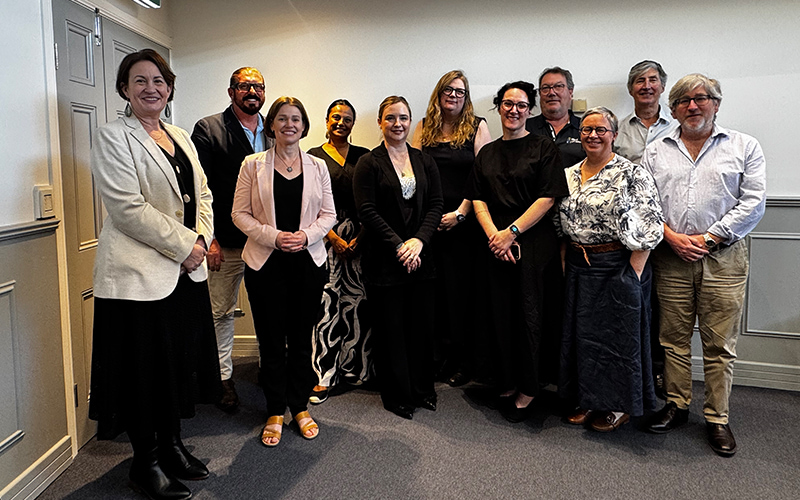
Underlying that work is Battisson’s central message: construction cannot be understood simply as what happens on site.
Planners, designers, engineers and specialists shape projects long before physical construction begins, while maintenance, performance and liveability remain important long after builders leave.
“If we’re going to face the challenges ahead and successfully come out the other side, we need to embrace the fact that so much work happens before we get to site and so much work then needs to happen after,” Battisson said.
For ACIF, ensuring those perspectives are understood is more than an advocacy objective. It is fundamental to helping Australia make better decisions about the homes, infrastructure and communities it will depend upon for decades to come.
AT A GLANCE
Who: Australian Construction Industry Forum (ACIF)
What: A membership organisation representing organisations and professionals from across the lifecycle of Australia’s built environment.
Where: Australia
Website: www.acif.com.au