
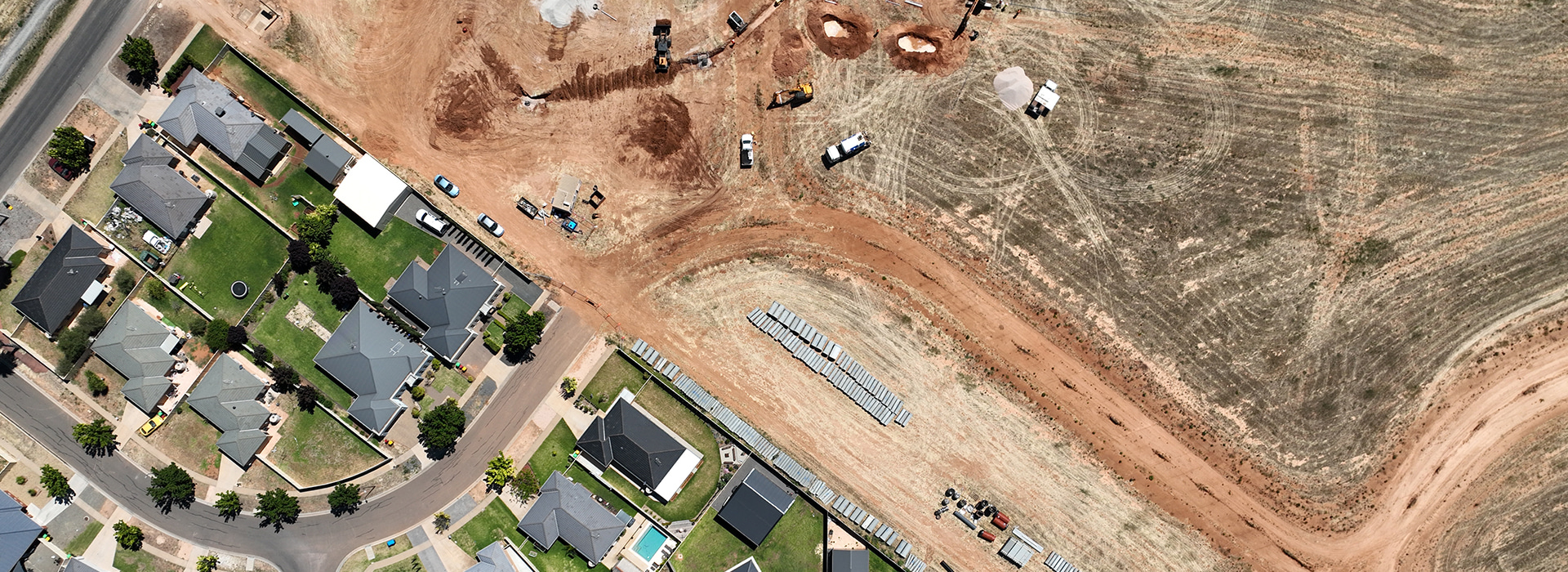
An Infrastructure Powerhouse
Building the Roads, Bridges, and Communities of Tomorrow
For more than 65 years, Wodens has been a leader in the infrastructure construction sector.Based in the Australian Capital Territory and operating throughout the surrounding regions, the civil construction company has established a reputation for delivering complex infrastructure projects that leave a lasting impact. From land developments and road rehabilitation programs to major bridge construction and highway upgrades, Wodens has become synonymous with quality, reliability, and innovation.
The company’s journey began in 1958 when Ken and Hazel Fryer started the business with little more than determination and a bulldozer. What followed was decades of growth, adaptation, and evolution as the company expanded its capabilities and cemented its position within the civil construction sector. Today, Wodens continues that legacy under the ownership of Managing Director Ben Helmers and Director Peter Middleton, who acquired the company in 2019 after years of working within the organisation.
As the business looks toward the future, it remains grounded in the same values that helped establish its reputation more than six decades ago: hard work, accountability, innovation, and a commitment to its people.
Foundations Built to Last
The story of Wodens is one of steady and purposeful growth.
Founded by Ken and Hazel Fryer in 1958, the company initially undertook a variety of civil construction projects before developing specialist expertise in subdivision development and land construction works. Over time, its capabilities expanded further into road construction and bridge infrastructure, areas that now form the cornerstone of the business.
Helmers believes the company’s longevity is a testament to its ability to evolve while remaining true to its core purpose.
“We were started by Ken and Hazel Fryer. They initially started with a bulldozer and then just expanded from there. Those were the humble beginnings, and like any husband and wife-founded company, they went through many years of evolution,” Helmers said.
That evolution has continued under the current ownership. Middleton has been part of the business since 1985, while Helmers joined in 2014, before both men took ownership in 2019. Their deep understanding of the organisation allowed them to continue building on its strengths while pursuing new growth opportunities.
Since acquiring the company, the leadership team has significantly increased revenue and expanded operations into regions surrounding the ACT, positioning Wodens for sustained long-term success.
Delivering Landmark Infrastructure
While Wodens has built an impressive portfolio across a wide range of civil construction disciplines, recent years have seen the company take on increasingly complex and high-profile projects.
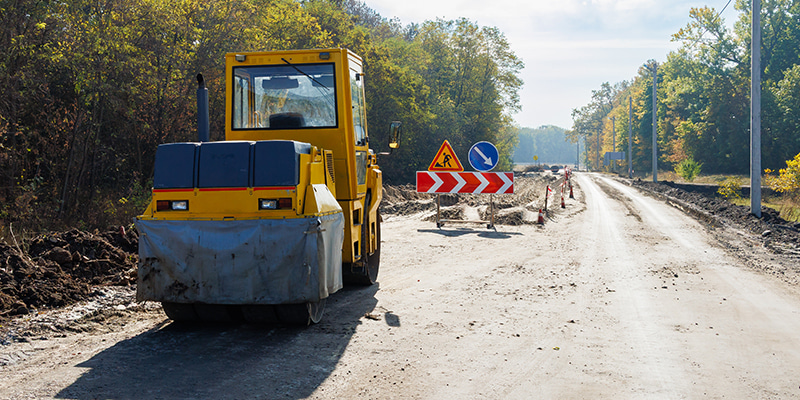
Among its notable achievements are several major road rehabilitation projects delivered for the ACT Government. These projects utilise foam-stabilised bitumen technology, a process that allows existing road materials to be recycled and reused while reducing environmental impact.
According to Helmers, sustainability benefits are a major reason the company has embraced the technology.
“We’ve completed several road rehabilitation projects using foam-stabilised bitumen. The benefits are that it’s much more sustainable, and there are also significant time savings and cost savings,” Helmers said.
Projects including the Kings Highway, Monaro Highway Rehabilitation Project, and Subway Drive Project have demonstrated the effectiveness of this approach while helping government clients achieve infrastructure objectives more efficiently.
Perhaps the most significant project in the company’s history, however, is the Monaro Highway Upgrade Interchange Project.
Valued at approximately $80 million, the project represents the largest single contract ever undertaken by Wodens. It includes the construction of a 200-metre Super T bridge as well as the reconstruction of an existing bridge, forming a critical piece of infrastructure for the ACT region.
“That project is the largest project, the largest single contract that the company has ever undertaken,” Helmers said. “It’s worth about $80 million and is due for completion around the end of 2026 or the start of 2027.”
The project is more than a construction milestone. It is also a demonstration of how Wodens continues to build capability and confidence in delivering increasingly sophisticated infrastructure.
As the bridge nears completion and traffic prepares to cross it for the first time, it stands as a powerful symbol of the company’s ambition and expertise.
Meeting Industry Challenges Head-On
The civil construction sector is currently navigating a range of complex challenges, from global economic uncertainty and supply chain disruption to escalating material costs and labour pressures.
For Wodens, maintaining resilience in this environment requires constant vigilance and strategic planning.
Helmers acknowledges that rising costs remain one of the most significant issues affecting the industry.
“Material shortages as well as cost escalation are significant challenges. Fuel increasing, oil increasing, and shortages of critical materials all have a substantial impact on our projects,” Helmers said.
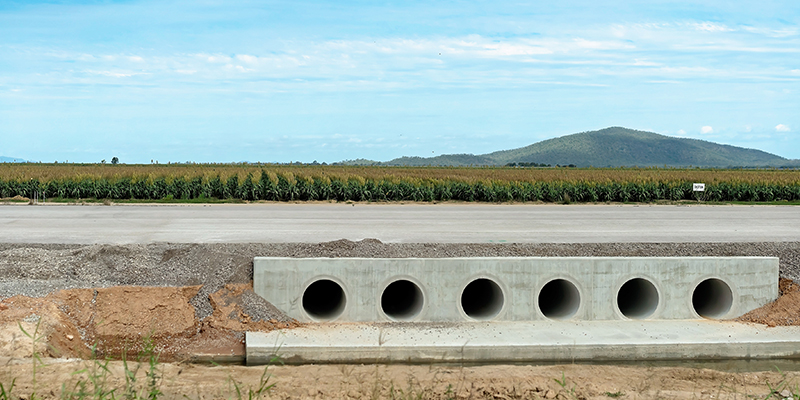
The company has also experienced difficulties sourcing essential materials such as plastic pipe products used across sewer, stormwater, and utility infrastructure projects. These shortages have highlighted the importance of strong supplier relationships and careful project planning.
Despite these obstacles, Wodens continues to pursue opportunities and adapt to changing market conditions. Rather than focusing solely on challenges, the company remains committed to identifying innovative ways to improve efficiency, strengthen operations, and deliver value to clients.
That mindset has led directly to one of the organisation’s most significant investment priorities.
Embracing the AI Revolution
Technology is reshaping virtually every industry, and civil construction is no exception.
At Wodens, artificial intelligence is viewed not as a distant possibility but as a practical tool that can improve project outcomes today.
Helmers sees AI as both an opportunity and a strategic imperative.
“The emergence of AI is getting a lot of attention in civil construction, and it’s where we’re focusing a lot of our time,” Helmers said.
The company is exploring applications across project management, contract administration, estimating, and operational planning. Existing software platforms are being assessed alongside emerging technologies to determine how AI can best support employees and improve efficiency.
Importantly, Wodens does not view technology as a replacement for people. Instead, it sees AI as a way to remove administrative burdens and enable employees to focus on higher-value activities.
“One of our key focus areas is project and contract management. We’re trying to reduce the amount of time people spend on repetitive tasks so they can focus on doing a really top-class job,” Helmers said.
The company’s commitment goes beyond experimentation. Dedicated resources are being invested in understanding how AI can be safely and effectively integrated into the business.
“We have a couple of people working almost full-time on how we can best utilise AI. We’re genuinely digging into the various options available and trying to drive the right culture around this technology because some great opportunities are emerging almost daily,” Helmers said.
A Culture Defined by People
For all of its technical expertise and project achievements, Wodens believes its greatest strength lies in its people.
The company employs approximately 90 direct staff members alongside a network of dedicated subcontractors and long-term partners. Together, they form a highly experienced workforce capable of delivering complex infrastructure projects across multiple disciplines.
What makes the workforce particularly remarkable is the loyalty it inspires.
According to Helmers, approximately 10 per cent of employees have been with the company for more than 30 years, while another 20 per cent have served for more than 20 years. A further 20 per cent have remained with the business for over a decade.
“Culture is everything. It’s the glue that holds everything together for us,” Helmers said.
That culture is rooted in respect, inclusivity, and a strong family-business mentality.
“For a company of our size, we still operate like a family-owned business. We all know each other very well, we all respect each other, and we all value each other,” Helmers said.
The organisation also maintains a strong commitment to self-performance, preferring, wherever possible, to undertake work with its own workforce rather than relying excessively on subcontractors.
This approach not only strengthens quality control but also creates valuable opportunities for employee development.
Investing in the Next Generation
Workforce development remains central to Wodens’ long-term strategy.
The company actively recruits new entrants to the industry and provides pathways for growth across a wide range of disciplines. Whether employees pursue careers in engineering, project management, plant operations, or administration, Wodens seeks to support their development every step of the way.
Helmers believes flexibility and mentorship are critical to helping people find fulfilling careers.
“We try to establish a pathway for people to get to where they want to end up in their careers. Sometimes a young person leaving school doesn’t know exactly what direction they want to go, so we try to give them a good taste of the industry,” Helmers said.
Alongside training and professional development, Wodens continues to invest heavily in new equipment and technology. Annual plant replacement and acquisition programs ensure employees have access to modern machinery while supporting the company’s commitment to self-performance.
The result is an organisation that combines traditional values with forward-thinking investment, creating a platform for continued growth and innovation.
Looking Beyond the Horizon
As Wodens enters its next chapter, the focus remains on responsible growth.
The company is exploring opportunities to expand its regional footprint throughout New South Wales while continuing to strengthen its capabilities in major infrastructure delivery. Although economic uncertainty and supply chain pressures may influence the pace of expansion, the long-term vision remains clear.
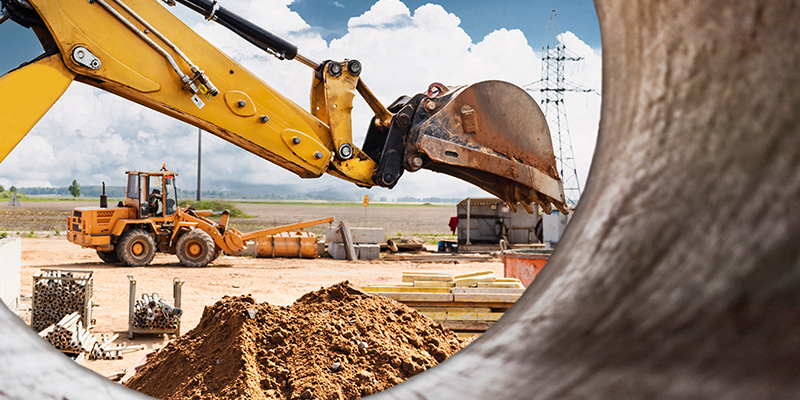
A particular area of focus is bridge construction, where recent successes have positioned the company to pursue larger and more technically complex projects in the future.
“We want to continue to grow responsibly, and that will include hopefully some more significant infrastructure projects. We have been building on our capability with bridges, and we really want to continue to build on those strong capabilities,” Helmers said.
For a company that began with a single bulldozer and a vision, that ambition feels entirely consistent with its history.
As Australia continues to invest in the infrastructure needed to support growing communities, companies like Wodens will play an essential role in shaping what comes next. Through innovation, technical expertise, and an enduring commitment to people, the business is proving that sustainable growth is built the same way as great infrastructure: one strong foundation at a time.
More than six decades after its founding, Wodens continues to connect communities, create opportunities, and build the roads, bridges, and developments that keep Australia moving forward. If the company’s history is any indication, its most significant achievements may still lie ahead.
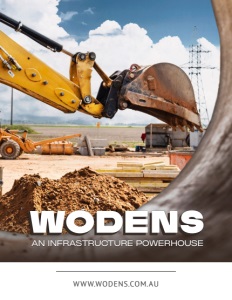
Click The Cover To View Or Download The Brochure
AT A GLANCE
Who: Wodens
What: Civil construction and infrastructure contractor specialising in land development, road rehabilitation, bridge construction, and major infrastructure projects.
Where: Australian Capital Territory and regional New South Wales, Australia.
Website: www.wodens.com.au
PREFERRED VENDORS/PARTNERS

Downer – www.downergroup.com
The Australian Capital Territory asphalt and pavements team delivers high-performance, sustainable road solutions backed by over 55 years of expertise. With deep local knowledge, technical capability and unmatched manufacturing resources, our engaged and collaborative team provides a safe pair of hands—achieving reliable outcomes that minimise disruption and create lasting value for communities and businesses.