Building Ahead
How Three Generations of Talent Carried a Carpenter’s Dream into One of Australia’s Most Enduring Homebuilding Businesses
There are few industries more exposed to the rhythms of economic confidence than residential construction. When confidence is high, cranes rise, and estates expand. When confidence falters, projects stall, margins tighten, and even long-established operators can disappear almost overnight. Yet in the Australian housing market, one name has not only survived shifting economic cycles, changing consumer behaviour, and the upheaval of a global pandemic, but has continued to evolve with purpose: Simonds.
For more than seven decades, Simonds has been part of the Australian housing story. What began as one man’s determination to create affordable homes for young families has grown into a multi-channel construction business employing hundreds directly and supporting thousands more through contractors and suppliers. Today, under the leadership of third-generation executive chairman and CEO Rhett Simonds, the company is not simply preserving its legacy. It is actively redefining what longevity looks like in a modern construction landscape.
The story of Simonds is not one of overnight success. It is one of reinvention, resilience, and a relentless commitment to staying relevant across generations.
From Boxing Gloves to Building Frames
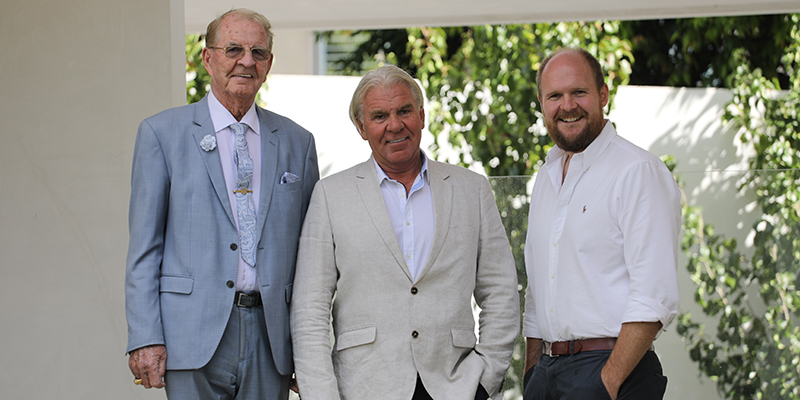
Long before Simonds became a recognised name in Australian housing, it was simply an idea carried by Rhett’s grandfather, Gary Simonds. Founded in 1949, the business emerged from circumstances that were anything but conventional. Gary had explored other career paths, including professional boxing and bookmaking, before a broken wrist and a lack of success in gambling led him to carpentry. What began as a necessity soon became a purpose.
Gary’s original vision was straightforward but ambitious. He wanted to provide affordable housing to young Australians. In the years that followed, he built homes one project at a time, learning the craft from the ground up while slowly laying the foundations of a family enterprise.
Eventually, his son joined the business, and in a move that would define the company’s culture for decades, Gary returned to the tools himself to teach the trade directly.
“The business started as a dream or a vision from my grandfather to provide affordable housing to young Australians,” Simonds describes.
That sense of apprenticeship, discipline, and hands-on learning became deeply embedded in the organisation’s DNA.
Scaling a Family Vision
By the late 1980s and early 1990s, Simonds faced a defining choice. The business had developed a solid reputation, but growth required a new mindset. The family made the strategic decision to move from boutique homebuilding into volume construction.
At the time, Simonds was building dozens of homes each year. Within a decade, that number approached one thousand annually as the business embraced scale, process, and operational sophistication.
It was during this period that Rhett entered the business. Unlike the generations before him, he did not come through the trade route. Armed with a commerce degree and a broader commercial perspective, he brought a new lens to the organisation.
Rather than focusing solely on the existing retail market, Rhett looked outward. He saw opportunities in emerging segments, including medium-density developments, townhouse communities, and wholesale investor housing. Under his influence, Simonds expanded its customer base beyond traditional family buyers and into adjacent sectors that would eventually become major growth engines.
Between 2005 and 2010, the business accelerated dramatically, growing to build between 2,500 and 3,000 homes each year.
What had once been a family builder was now a national force.
The Public Market Chapter
Growth attracted attention. In 2014, Simonds was approached about taking the company public.
The result was a successful listing on the Australian Securities Exchange, a milestone that validated decades of work while opening a new chapter for the business. The family sold down a substantial portion of its holdings and shifted its focus to a family office structure.
As the business began showing signs of operational drift, Rhett and his father made the decision to return. The family still held a meaningful stake, and with that came responsibility.
Rhett stepped in as interim CEO, helping restructure leadership and re-establish operational discipline. It was a significant intervention, but one that would prove critical in preparing the business for what came next.
The Pandemic Pressure Test
When COVID-19 disrupted global supply chains, few sectors felt the impact more severely than construction.
Material shortages, labour constraints, inflationary pressure, and government stimulus created what Rhett describes as a “profitless boom.” Demand surged, but margins disappeared as builders across Australia struggled to fulfil contracts while absorbing escalating costs.
With a strong balance sheet, long-standing supplier relationships, and a leadership team prepared to act quickly, the company moved aggressively. The family increased its ownership stake back to approximately 75 percent while also acquiring competitors who chose to exit the industry.
Rather than simply endure the crisis, Simonds used it as an opportunity to strengthen its market position.
“For us, it was humbling, but also very opportunistic,” Simonds relays.
That philosophy of disciplined opportunism would become central to the company’s next phase.
Building Culture at Scale
Today, Simonds directly employs between 650 and 700 staff while supporting more than 8,000 contractors across its operations. Yet for Rhett, scale alone is not the measure of success.
He speaks often about having two customers: the people buying homes and the people building the business from within.
That internal focus has become one of Simonds’ key differentiators in an industry often challenged by skills shortages and talent retention.
Rhett believes the company’s longevity provides trust, but culture is what keeps people engaged.
“Our people are everything, and without the right people, it’s a really hard business to run,” Simonds notes.
Despite being publicly listed, Rhett says the organisation still works hard to maintain the energy and accountability of a family-run business. Performance is rewarded, trust is earned, and staff are encouraged to feel connected to the company’s mission.
That blend of corporate structure and family values is increasingly rare.
Partnerships That Span Generations
One of Simonds’ greatest strategic advantages lies in relationships that stretch back decades.
Some supplier partnerships have existed for more than fifty years, particularly in timber framing and structural materials. Others, including tile and cabinetry providers, have supported the business for more than three decades.
During the pandemic, those relationships proved invaluable.
While competitors struggled to secure essential materials, Simonds was able to leverage long-standing trust built over generations.
For Rhett, supply chain resilience is not built in a crisis. It is built over years of consistency.
That thinking reflects a broader truth about construction. Buildings may rise in months, but businesses capable of building them sustainably are usually shaped over decades.
Investing in the Future
As the market stabilises, Simonds is investing heavily in three strategic growth areas.
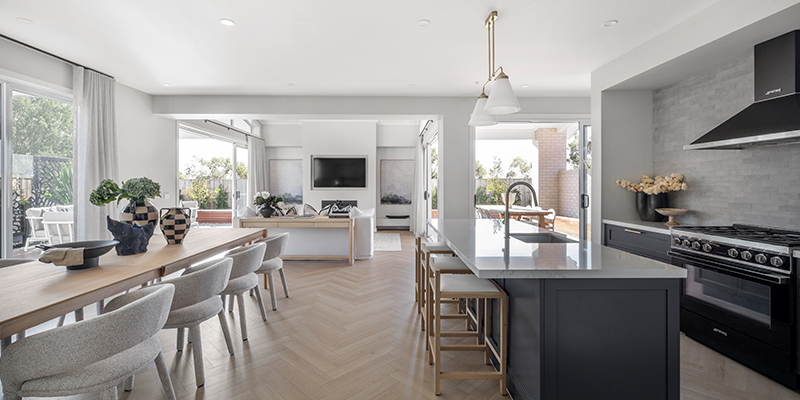
The first is medium-density housing, a segment that includes townhomes and community developments. The second is knockdown-rebuild projects in established urban areas where older homes are being replaced with modern residences. The third is wholesale housing for investors and build-to-rent opportunities.
Alongside physical construction, there is another area attracting significant investment: technology.
Rhett acknowledges that construction has historically been slow to modernise. That is precisely why Simonds is re-engineering internal systems from deposit through to handover, integrating advanced technology and AI-driven platforms to improve efficiency and customer experience.
It is a bold move in an industry often resistant to change, but Rhett sees it as essential. Simonds is not trying to become the biggest builder in Australia; It is trying to become the best.
More Than Houses
For many businesses, seventy-seven years would be enough to justify pride. For Simonds, it appears to be fuel.
Rhett speaks not about market dominance or rankings, but about customer journeys, predictable growth, and delivering experiences that make one of life’s most stressful purchases feel manageable. That mindset may ultimately explain why Simonds has outlasted so many of its peers.
Buildings age. Markets fluctuate. Economic cycles repeat. But businesses built on trust, adaptability, and generational accountability tend to endure. As Australia’s housing sector enters another period of transformation, Simonds is not merely participating in the future of construction; It is helping shape it.
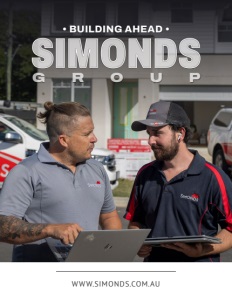
AT A GLANCE
Who: Simonds Group
What: One of Australia’s most established and well-respected residential builders
Where: Australia
Website: www.simonds.com.au
PREFERRED VENDORS/PARTNERS

Climate Technologies – www.bonaire.com.au
For over 70 years, Bonaire has served three generations of Australians, with its complete range of heating and cooling solutions. Our range is purpose-built for Australia’s unique conditions. Guided by a design philosophy anchored in practical innovation and sustainability, our energy efficient solutions are built to last a lifetime.

ARC – The Australian Reinforcing Company – www.arcreo.com.au
ARC is a long-standing Australian supplier of reinforcing steel, with roots dating back to 1920. Known for consistent quality and reliability, the business supports construction projects nationwide through a network of 47+ branches, offering mesh, bar, and accessories, positioning itself as a dependable, one-stop reinforcing partner.

Rinnai Australia Pty Ltd – www.rinnai.com.au
Rinnai Australia Pty Ltd is a wholly owned subsidiary of Rinnai Japan Corporation, a listed company headquartered in Nagoya, Japan. Rinnai Australia supplies some of the world’s finest heating & cooling products sourced locally from Australia, and from Rinnai’s 40 plus manufacturing facilities in Japan and around the world.

Hayme Paint – www.haymespaint.com.au

McKern Steel – www.mckern.net.au
McKern Steel has been supplying quality structural steel to Australia’s residential and commercial sectors for over 50 years. We pride ourselves on reliable service, timely delivery, and strong industry relationships. Committed to safety and innovation, McKern Steel is your trusted partner for all steel needs