Building More Than Structures
This Leading Construction Leader Has Built Its Reputation on Innovation, Loyalty, and a Belief That Construction Is Ultimately About People.
There is a certain kind of company that becomes bigger than the service it provides. Its trucks may carry equipment, its teams may pour concrete, erect systems, and meet impossible deadlines, but somewhere along the way, it begins to stand for something more. In the case of Pacific Formwork, that something is trust.
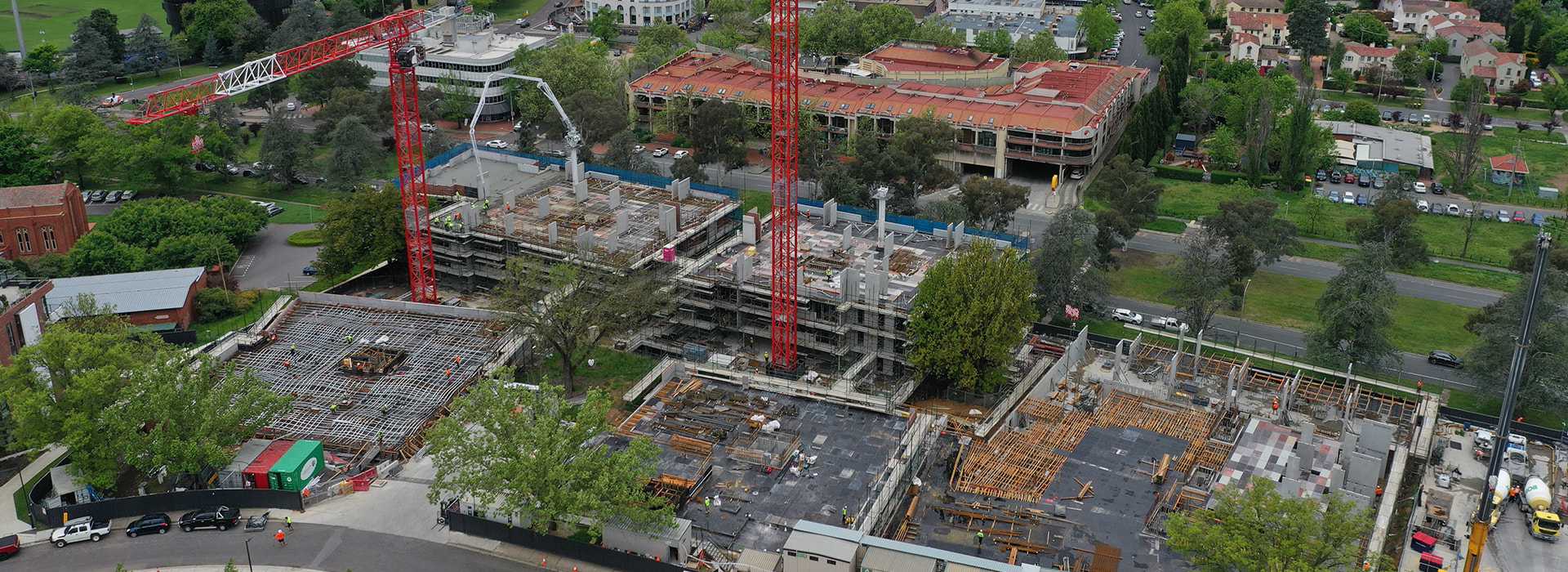
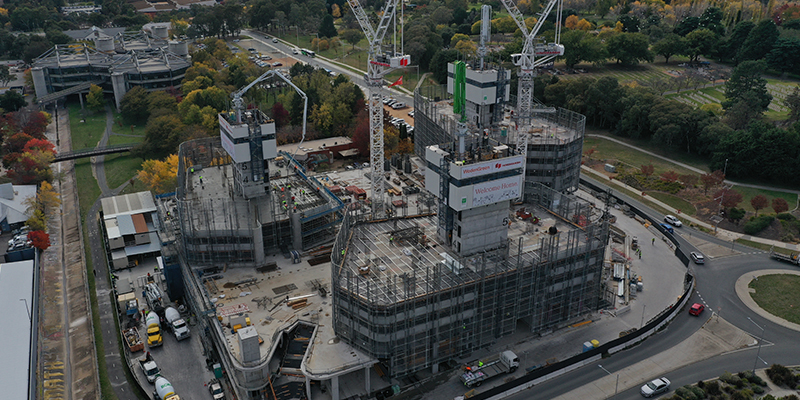
For nearly three decades, Pacific Formwork has been shaping some of Australia’s most demanding construction projects, from schools and hospitals to bridges, tanks, water parks, and high-rise developments. Yet for Director Grace Ferreira, the company’s greatest achievement is not found in concrete volumes or project portfolios. It is found in the people who have stayed.
And now, in what Ferreira describes as one of the company’s proudest milestones, Pacific Formwork is welcoming the second generation of workers into the business. That kind of loyalty is not built by accident.
It is built the same way Pacific Formwork approaches everything else—carefully, intentionally, and with an eye toward the future.
Foundations Built on Opportunity
When Pacific Formwork was founded in 1998, the opportunity seemed clear. A gap had emerged in the local market after another supplier closed its doors, leaving contractors with limited options for specialist formwork services.
Ferreira and her team saw more than a commercial opening. They saw a chance to create something lasting.
The original vision was straightforward: provide quality formwork solutions for the local construction industry while building a workplace where employees genuinely wanted to belong.
That mission, Ferreira says, has never changed.
“People often talk about business growth in terms of numbers, but for us, it was always about creating somewhere people wanted to stay,” Ferreira states.
From the beginning, Pacific Formwork entered an industry known for mobility. Construction workers often move from project to project, contractor to contractor, city to city. Long-term loyalty can be rare. Pacific Formwork chose to challenge that norm.
Nearly thirty years later, employees who started on day one have only recently retired after careers spanning twenty-seven years. Others who moved away have asked to return, some more than once.
For Ferreira, that speaks louder than any marketing campaign ever could.
Evolving Beyond Traditional Formwork
What began as a conventional formwork operation has grown into a diversified construction group capable of tackling nearly any structural concrete challenge.
As Pacific Formwork accumulated experience, it also built the financial strength needed to invest in expanded capabilities. That expansion led to the launch of a sister operation focused on precast solutions, allowing the business to manufacture concrete wall panels and structural components in a controlled factory environment before delivering them to the site.
The shift was strategic. Ferreira noticed market demands were changing. Clients were increasingly seeking faster installation, improved cost control, and reduced exposure to weather delays. Precast offered all of that.
Instead of being dependent on site conditions, Pacific’s teams could manufacture components indoors while broader site construction continued, dramatically improving project efficiency.
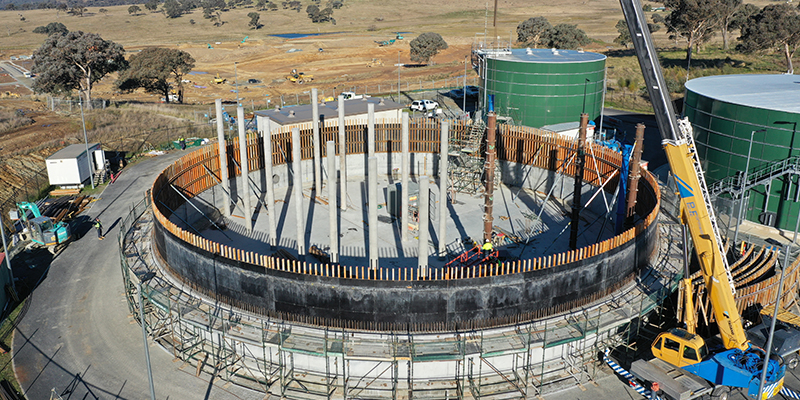
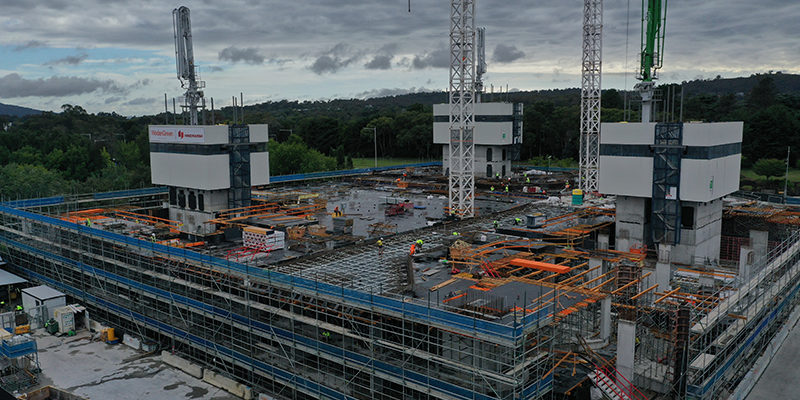
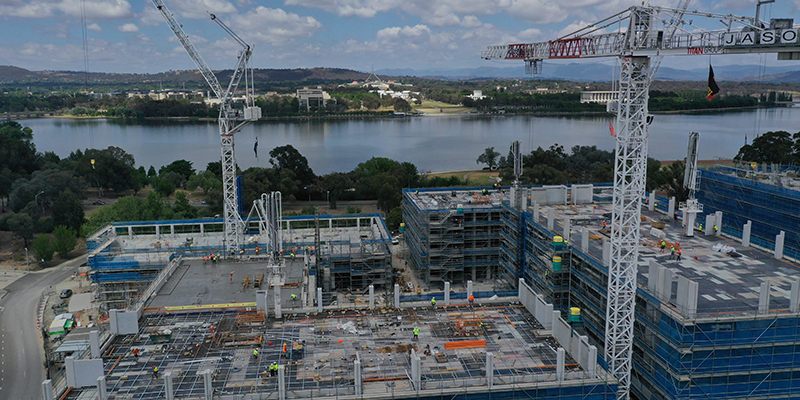
Today, the company’s project capabilities span an impressive range of sectors. Schools, hospitals, detention tanks, bridges, commercial towers, industrial facilities, and infrastructure all fall within Pacific Formwork’s scope.
If concrete formwork is required, Pacific expects to deliver.
“Whatever the project is, if it needs formwork, we know we can do it,” Ferreira notes.
That confidence comes not from ambition alone, but from decades of accumulated expertise and a willingness to evolve.
A Family Business in Every Sense
Ask Ferreira what truly separates Pacific Formwork from others in the market, and the answer comes immediately: Culture. More specifically, family, not as a slogan, but as a practice.
Pacific Formwork operates with a deeply personal approach to employee relationships. Workers are not viewed as numbers on a payroll or resources assigned to projects. They are treated as extended family members.
That means management often finds itself playing multiple roles. Sometimes they are mentors. Sometimes they are counsellors. Sometimes they are simply listeners.
Ferreira says employees regularly approach leadership about personal challenges, family issues, or concerns outside work. That level of openness, she believes, is earned through consistency.
The company invests heavily in making work physically easier and emotionally safer.
Early in Pacific’s journey, after seeing firsthand how physically demanding construction work could be, the business began investing in lighter aluminium systems and improved lifting equipment. While many competitors continued relying on heavier, more traditional systems, Pacific prioritized ergonomics and worker wellbeing.
The result was immediate. Workers reported feeling less exhausted at the end of the day. But physical safety was only part of the equation.
Inside Pacific’s offices, employees find stocked kitchens, fresh fruit, healthy snacks, shared lunches, birthday celebrations, and regular gatherings that strengthen relationships beyond project deadlines.
Every Friday, staff from multiple offices gather for lunch.
“We want people to enjoy coming to work. Yes, you work hard, but you also need to enjoy what you do,” Ferreira explains.
In an industry where employee turnover is often accepted as unavoidable, Pacific Formwork has made retention part of its competitive advantage.
Technology as a Competitive Edge
Many construction firms talk about innovation, but Pacific Formwork puts it into practice.
From digital safety inductions to proprietary management systems, technology touches nearly every part of the company’s operations. Vehicles and equipment carry QR codes that instantly provide service histories and maintenance records.
Precast panels are digitally tagged with their own traceability records, allowing teams to access engineering drawings, production photographs, and quality documentation with a simple scan. Payroll systems that once took two full days each week are now being redesigned to take less than an hour.
The business has even introduced robotics into its precast operations, using automated polishing systems to create smoother mould surfaces and eliminate imperfections in finished concrete panels.
For Ferreira, technology is not about trends. It is about efficiency, transparency, and staying ahead.
“We’re always looking at better ways of doing things,” Ferreira relays.
That mindset has occasionally left clients surprised.
Ferreira admits some builders are startled to discover that a subcontractor can sometimes be more digitally advanced than the principal contractor.
Pacific Formwork sees no reason why that should be unusual.
Investing Where It Matters Most
In recent years, the company has invested heavily in modern formwork systems designed to improve safety and site efficiency. Warehousing capacity has been expanded to protect increasingly valuable equipment inventories. Office environments have been upgraded to support employee comfort and productivity.
At the same time, Pacific continues to pour resources into workforce development.
Upskilling programs are central to the company’s future planning, particularly as skilled supervisors become harder to find across the construction sector.
Ferreira sees talent development as essential to maintaining quality while continuing to grow.
And growth has come quickly. The company has effectively doubled its turnover over the past year, driven by a series of major projects and growing demand for services. But Pacific remains cautious. Growth for growth’s sake is not the goal. Protecting standards is.
Loyalty That Extends Beyond Employees
The same values Pacific Formwork applies internally also shape its supplier relationships.
Ferreira speaks passionately about the vendors who supported Pacific during its earliest years, often extending credit and backing the business when it had little history and even fewer guarantees.
Today, Pacific looks for honesty, reliability, and integrity when selecting suppliers, often choosing long-term partnerships over short-term cost savings.
Ferreira also makes a point of supporting smaller suppliers whenever possible, remembering how much it mattered when others gave Pacific its own chance to prove itself.
“We remember being a small company. If someone has capability and integrity, we’re willing to back them,” states Ferreira.
That philosophy has helped build a network of trusted partners that spans decades, not projects.
One of the company’s valued vendors remains Consystex. A manufacturer that operates state-of-the-art facilities in Sydney, Melbourne, and Brisbane, Consystex has built an unsurpassed reputation for producing and supplying sustainable, reliable products to all of its valued partners. With a host of concrete options available, Pacific Formwork uses some of its products and trusts Consystex to provide the very best materials.
Growing Without Losing the Soul
Looking ahead, Pacific Formwork has no shortage of opportunities. Geographic expansion is being considered, further vertical integration is underway, and new complementary services are actively being explored.
But Ferreira is clear about one thing: expansion will never come at the cost of identity.
In construction, scaling too quickly can sometimes dilute what made a company successful in the first place. Culture weakens. Standards slip. Relationships become transactional.
Pacific Formwork has no interest in that path.
Instead, the goal is measured growth—expanding capabilities while preserving the values that built the business in the first place.
It is very much focused on maintaining reputation, supporting its employees, strengthening client relationships, and protecting the soul of the company.
After nearly thirty years, Pacific Formwork understands something many businesses spend decades trying to learn.
AT A GLANCE
Who: Pacific Formwork
What: A leading manufacturer that is committed to its staff, clients, and the growth ahead
Where: Canberra, Australia
Website: www.pacificformwork.com.au
PREFERRED VENDORS/PARTNERS

Big River Group – www.bigrivergroup.com.au
Big River Group manufactures and distributes timber, steel, and building products across commercial, residential, and civil construction markets. With 26 sites across Australia and New Zealand and 120 years of experience, we back every product with technical expertise and a national support network you can rely on.
Consystex – www.websitename.com

Dincel Construction Systems – www.dincel.com.au
Originating from the foundations of a structural engineering consultancy back in 1977, Dincel Structural Walling has emerged as Australia’s Own “Concrete Wall with Benefits”. Our internationally patented snap-lock joint connects the Dincel panels for fast, easy and lightweight manoeuvrability and installation – delivering a waterproof skin, and fire safe permanent formwork solution.

Covert Procurement – www.covertprocurement.com.au
Covert Procurement is an Australian construction importing specialist delivering bulk timber, PPE, and site consumables directly from overseas manufacturers to your job site or warehouse. With full control over their supply chain, they offer competitive pricing, reliable supply, and quality-assured materials trusted by some of Australia’s leading formwork companies.

Little Fuel Co – www.littlefuel.com.au
Delivering tailored diesel solutions across Canberra and surrounds, we provide on-site refuelling for equipment, machinery and tanks as well as convenient direct fills from our local tank at competitive prices. Our advanced tracking and reporting software gives businesses full fleet fuel visibility, reducing downtime, streamlining administration, and supporting smarter operations with reliable, customer focused services.