Building a New Standard for the Next Decade
Translating a Decade of Residential Construction Experience into a Broader Vision for How Australians Live.
For MAC Living, its 10th anniversary represents considerably more than a corporate milestone. It marks the beginning of a new chapter for a Melbourne builder that has grown from approximately 50 homes in its first year to a diversified construction business delivering hundreds of homes annually.
Founded in 2016 as Melbourne Architectural Construction, the company quickly became better known by the initials displayed across its construction sites: MAC. Trades, suppliers, sales partners and estate agents came to recognize the name, making it an identity the company was determined to retain when it began contemplating a major brand refresh.
The result was MAC Living. After roughly 18 months of development with a marketing company, the new identity, logo and supporting materials were finalized in November 2024 and formally rolled out this year. The intention was to preserve the recognition MAC had built while introducing a name better suited to where the company intends to go next.
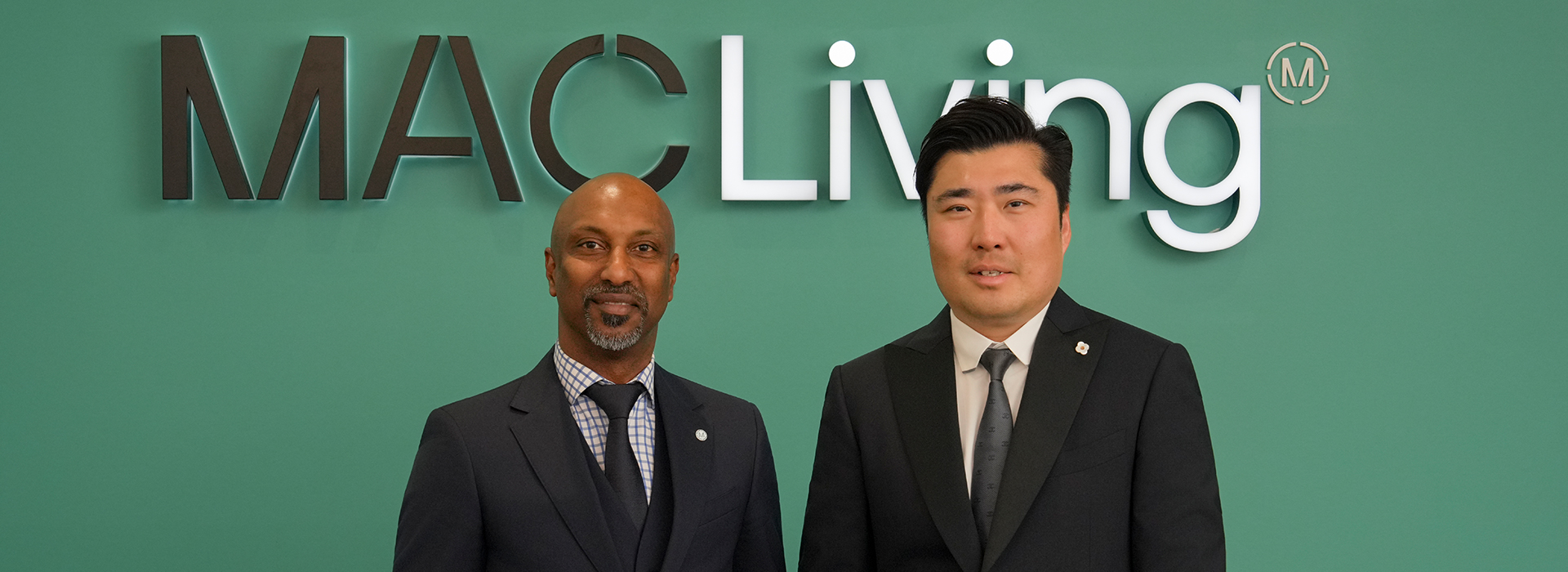
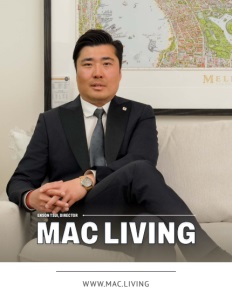
“We try to bring out the living, which is we try to update our branding, we try to update our specification, and we try to update our company structure, since we’re trying to give people the new level of living standard,” Enson Tsui, Director of MAC Living, notes.
That philosophy reaches beyond a new logo. New specifications, building details, floor plans and façades are being introduced as part of a wider strategy designed to reposition the business for its second decade.
From 50 Homes to a Diversified Builder
MAC Living’s growth has been rapid. Beginning as a relatively small domestic residential builder, it completed around 50 homes during its first year. Within three years, growing relationships with wholesale partners had helped lift that figure to approximately 150 homes annually.
Expansion then brought diversification. Art Residence was established to pursue medium-density development opportunities and joint ventures with investors and land developers. Combined activity across MAC and Art Residence increased production to approximately 200 to 250 homes annually around the COVID period, with the company indicating its current combined volume has reached approximately 300 to 350 homes per year.
After COVID, another business arm, Verso Group, was established. While MAC operates in Class 1A domestic construction, Verso was created as a commercial builder capable of delivering more specialized projects, particularly housing associated with Australia’s National Disability Insurance Scheme.
The move was driven by demand from funding partners seeking builders capable of achieving the standards required for High Physical Support accommodation. These projects can incorporate specialist inclusions and commercial-level sprinkler systems, requiring commercial building capabilities despite outwardly resembling conventional homes.
The company says it has delivered approximately 120 NDIS houses during the past three years, demonstrating how its capabilities have expanded far beyond the domestic building operation from which it began.
Technology Connecting the Entire Business
As the company has grown, technology has become increasingly important to managing that complexity. MAC Living has used DataView from an early stage, while more recently introducing a platform called Beans with the support of its in-house IT capability.
Initially focused on estimating and procurement, the system is being expanded to connect site supervisors directly with office teams, enabling information, photographs and construction updates to move between the field and head office.
The next phase integrates administration and accounting, bringing procurement, invoices, payments, permits and other administrative processes into the same environment. Ultimately, MAC Living intends to connect CRM, sales and marketing functions as well.
“We’re going to be trying to put everyone into one platform. So that’s the other six months away, but it’s going to be very clean for everybody on the same page,” Tsui relays.
The objective is straightforward: visibility. Whether activity occurs on a construction site, inside the office or before a project formally enters the system, the company wants its people to understand what is happening, what is underway and what is coming next.
The Advantage of One Roof
Behind that technology sits a team of approximately 35 to 36 full-time employees encompassing drafting, estimating, administration, accounting, sales and site supervision. Two general managers oversee office and construction operations, respectively.
Yet MAC Living sees its greatest cultural strength not simply in the size of that team, but in how closely its departments operate.
Sales communicates anticipated workflow to administration and construction teams well before projects arrive. Administration manages timelines and efficiencies, while construction teams provide information that can be relayed through sales channels. Rather than individual departments operating independently, there is an emphasis on visibility and forward planning.
“Everyone from the different departments, but everyone is very close,” Tsui offers.
Keeping key functions in-house is another important advantage. MAC Living’s internal drafting team, for example, can communicate directly with sales staff and clients, allowing feedback to move rapidly from initial concepts through to working drawings.
That responsiveness is intended to provide both efficiency and confidence. Clients can engage with a process in which the company remains closely involved from an early sketch through to detailed plans, rather than relying entirely on externally subcontracted design resources.
Relationships That Withstood COVID
Long-term supplier relationships have also been fundamental to MAC Living’s development. The company’s founders brought extensive industry experience into the business, including established connections with major Australian suppliers.
Responsibilities between the business partners have naturally developed around complementary strengths, with one focusing more heavily on sales, marketing, branding and products, while business partner Hesh oversees procurement and supplier relationships.
Those relationships became particularly valuable during COVID, when disrupted supply chains placed enormous pressure on Australia’s construction industry. MAC Living recalls instances in which suppliers significantly reduced the number of builders they could service, yet the company retained access.
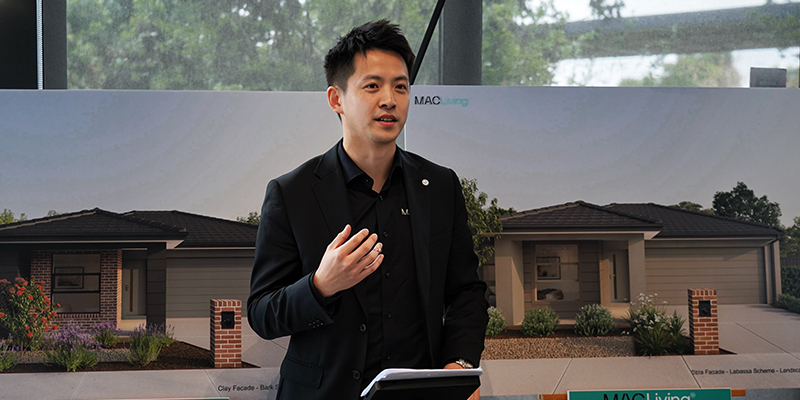
“We really have good relationships and the buying power with all the major suppliers, especially you can see after COVID,” Tsui describes.
Surviving that period influenced what came next. Rather than simply returning to business as usual, MAC Living emerged with greater confidence in the resilience of its supply chain and began asking how it could deliver something different to the market.
Investing Across the Business
Today, investment is occurring across technology, people, marketing and product development. The underlying objective is not to make employees work harder, but to provide systems that allow them to operate more efficiently.
The 10th anniversary itself will become an important expression of that investment. MAC Living previously held a seventh-anniversary event after COVID restrictions eased, bringing together approximately 300 suppliers, trades and sales partners. A 10-year celebration is planned for October, where the business expects to reflect on its growth while outlining the direction of its next five years.
That direction increasingly extends beyond building homes for others.
Through Art Residence, MAC Living established its first property fund in March 2026. At the time of the interview, the company said approximately $15 million had entered the pool, providing capital it intends to use in pursuing smaller land subdivision opportunities and supporting development activity.
Taking Greater Control of the Product
The next five years will see MAC Living continue its core construction operations while expanding joint ventures with land subdivision developers and acquiring selected subdivision and medium-density sites itself.

It represents a significant strategic evolution. Participating earlier in development gives the company greater influence over block dimensions, housing design, price points, specifications and finishes. Instead of receiving a block and determining what can be constructed on it, MAC Living increasingly wants to participate in creating both the land and the housing solution.
“It’s not just about the building itself. It’s also us starting to decide what lot size we’re going to become and how we design a house to fit on the block,” Tsui expands.”
The business also intends to broaden the way customers purchase its products. Traditional house-and-land transactions can involve separate contracts and decisions made before buyers can physically experience the finished product. MAC Living sees an opportunity to complement that model with completed homes offered through a single-contract approach.
For investors and first-home buyers in particular, the company believes greater certainty and convenience can be powerful. Buyers can better understand the selections, finishes and ultimate product rather than committing exclusively from plans and paperwork.
It is another expression of the philosophy behind the MAC Living name: creating multiple products for different buyers rather than remaining confined to one traditional building model.
Building the Second Decade
Housing markets rarely stand still. Interest rates change, government policies evolve, taxation settings shift and buyer expectations continue to move. MAC Living’s response has been to evolve with them.
COVID tested its supply chain and operating model, but it also became a catalyst for change. The company has since diversified its construction capabilities, invested in integrated technology, refreshed its specifications and finishes, entered property funding, expanded development ambitions and undertaken the most significant rebranding in its history.
“The industry and the market, it’s something change or drives us to change as well,” Tsui says.
Ten years after beginning with approximately 50 homes, MAC Living enters its second decade with considerably greater scale and a much broader definition of what it can be. Construction remains the foundation of its turnover and cash flow, but development, funding, technology and new housing products are increasingly becoming part of the same story.
The letters MAC have survived because they carry a decade of recognition. The addition of “Living” signals what comes next: a business seeking not simply to build more, but to exercise greater influence over what it builds, how it delivers it, and, ultimately, how its customers experience the finished home.
Click The Cover To View Or Download The Brochure
AT A GLANCE
Who: MAC Living
What: MAC Living, formerly Melbourne Architectural Construction, is a Melbourne-based residential and commercial construction group with capabilities spanning domestic housing, medium-density development, NDIS accommodation, property investment and development.
Where: Melbourne, Victoria, Australia.
Website: www.mac.living
PREMIER ENTERPRISE PARTNER

LDB Group – www.ldb.com.au
LDB Group has helped businesses grow with confidence for over 40 years. Our integrated team provides tax, business advisory, accounting, wealth and superannuation expertise across all industries, including property and construction. Working as one, at the right time.