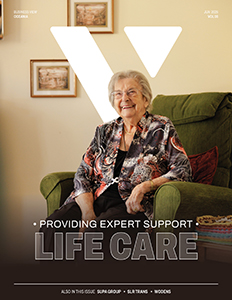

Providing Expert Support
Empowering Australians to Age on Their Own Terms
For more than seven decades, Life Care has been helping South Australians age with purpose and dignity. Established in 1950, Life Care has evolved alongside Australia’s aged care sector, adapting to changing community needs while remaining steadfast in its commitment to supporting older Australians.
What began with residential aged care facilities and retirement villages has transformed into a contemporary organisation focused on helping people remain safely and comfortably in their own homes for as long as possible.
At the centre of this transformation is a simple but powerful belief: every individual deserves to live life on their own terms. Life Care’s vision statement supports this belief: “We support older South Australians shaping their own positive ageing, expressed through meaningful connections and participation.”
“We have always approached the needs of elderly people and tried to keep them comfortable in place as much as we can,” says Grace Scaffidi. “The aim is to deliver person-centred care and services wherever those people are and make sure they can live life on their own terms.”
That philosophy continues to shape every aspect of Life Care’s operations as the organisation embraces a future centred on home care, allied health, and holistic wellbeing.
Evolving with the Needs of the Community
Few organisations can claim the longevity and adaptability that Life Care has demonstrated over the past 75 years.
As Australia’s aged care landscape evolved, Life Care consistently positioned itself at the forefront of emerging service models. When home care packages first emerged in the early 1990s, the organisation became one of the first providers in South Australia to embrace and deliver these services.
That willingness to innovate became particularly significant in 2023 when Life Care made the strategic decision to move away from accommodation-based services and focus entirely on home care and allied health.
The shift closely aligned with recommendations from Australia’s Royal Commission into Aged Care and reflected growing government support for ageing in place.
“We strategically moved away from accommodation-based services and really focused on home care and allied health services,” explains Scaffidi. “That is in direct connection to the government focus around having people stay in their homes as long as we possibly can, so they can age in place with dignity and independence.”
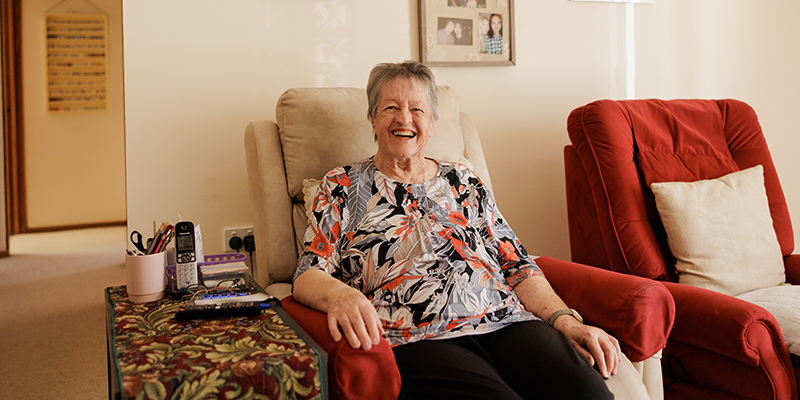
The result is an organisation uniquely positioned to help older Australians remain in familiar surroundings while receiving comprehensive support tailored to their individual needs.
Rather than dictating what care should look like, Life Care works alongside clients to create personalised solutions that reflect their goals, preferences, and lifestyle choices.
“We really focus on each person as a unique individual, making sure they get the care in the way that they want it, when they want it, and how they want it,” says Scaffidi.
Delivering Integrated Care for the Whole Person
One of Life Care’s defining strengths is its commitment to delivering a truly integrated model of care.

Many providers specialise in a single aspect of support, requiring clients and families to coordinate multiple external providers. Life Care has taken a different approach.
The organisation brings together a broad range of disciplines under one umbrella, enabling clients to access services through a single trusted provider.
From nursing and physiotherapy to exercise physiology, personal training, massage therapy, chaplaincy, gardening, cleaning, and personal care, Life Care offers a comprehensive network of support designed to simplify the client experience.
“We do focus on giving a fully integrated care model,” says Scaffidi. “Our staff covers a broad range of disciplines, so clients know they are always dealing with Life Care.”
This integrated structure not only streamlines care delivery but also builds trust and continuity.
For clients navigating complex health conditions or changing care needs, having a single organisation coordinate services can significantly reduce stress and uncertainty.
“I think that integrated service delivery really helps make the process a lot more streamlined,” Scaffidi says. “It gives our clients assurance that they are constantly dealing with Life Care, no matter who they are talking to.”
Specialist Programs Making a Difference
As the needs of older Australians become increasingly complex, Life Care continues to expand its specialist capabilities.
Among its most significant recent initiatives are dedicated dementia care, restorative care, and palliative care programs designed to address some of the most challenging aspects of ageing.
These services combine clinical expertise with compassionate support, helping individuals and families navigate difficult circumstances while maintaining quality of life.
The organisation’s dementia care services extend beyond traditional in-home support. Specialised clinic-based programs cater specifically to individuals living with Alzheimer’s disease, Parkinson’s disease, and other cognitive conditions.
These programs combine therapeutic activities, fitness training, and social engagement opportunities tailored to participants’ unique needs.
By providing structured opportunities for connection and interaction, Life Care helps combat one of the most significant challenges facing older Australians: isolation.
“We have specialised Alzheimer’s, Parkinson’s and dementia care classes and group sessions,” explains Scaffidi. “It is an alternate service that helps people get out of their homes so they do not necessarily feel isolated and can still get that social aspect.”
Similarly, the organisation’s restorative care programs focus on rehabilitation following surgery, illness, or falls, supporting clients as they regain strength, mobility, and confidence.
The outcomes have been impressive, particularly when combined with enhanced collaboration across the healthcare system.
Partnerships Driving Better Outcomes
Healthcare is increasingly interconnected, and Life Care recognises that effective partnerships are essential for achieving the best possible outcomes.
One area where this approach has delivered particularly strong results is through closer collaboration with general practitioners and broader healthcare networks.
Through integration with My Health Record and direct connections with GPs, Life Care has become a more active participant in each client’s care journey.
These partnerships facilitate smoother transitions between hospital and home, improve communication between providers, and reduce the likelihood of adverse incidents.
“Our relationships with GPs and clinics are invaluable when you are talking about patient care,” says Scaffidi. “Trying to make that process as seamless as possible has produced some really great healthcare outcomes.”
The organisation’s in-house nursing team also plays a vital role in coordinating care, ensuring clients receive timely support while reducing the risk of falling through the cracks of an often-complex health system.
The result is a more connected, responsive, and effective model of care that benefits both clients and healthcare partners.
Investing in Innovation
Technology is becoming an increasingly important tool in the delivery of aged care, and Life Care is embracing its potential.
Rather than adopting technology for technology’s sake, the organisation is focused on using digital solutions to improve client experiences and reduce administrative burdens.
One key area of investment involves automating compliance and reporting processes that can often consume valuable time and attention.
By streamlining these requirements, Life Care aims to ensure staff spend less time on paperwork and more time providing meaningful care.
“We are investing in technology to make the client experience really seamless,” says Scaffidi. “We want clients focused on their care rather than paperwork and approvals.”
The organisation is also enhancing digital tools that allow clients greater flexibility in managing appointments and services.
Whether clients prefer a highly involved role in organising their care or would rather leave those details to Life Care’s team, the organisation is creating systems that accommodate both preferences.
This commitment to innovation reflects a broader philosophy of empowering clients while maintaining the personal relationships that remain central to quality care.
Navigating Industry Reform
Australia’s aged care sector is currently undergoing one of the most significant periods of reform in its history.
While these changes present opportunities, they also introduce new challenges for providers and clients alike.
One of the most notable developments has been the introduction of Support at Home reforms, which include participant contributions for certain services.
While designed to create a more sustainable system, these changes have raised concerns among some older Australians who worry about affordability.
“The biggest change has been participant contributions,” Scaffidi explains. “People are starting to question whether they can afford the care they need.”
Life Care is committed to helping clients navigate these complexities while ensuring financial concerns do not prevent individuals from accessing essential support.
At the same time, the reforms have created opportunities for enhanced clinical care funding, enabling providers to invest more heavily in specialised programs.
For Life Care, this has supported expansion in areas such as dementia care, palliative care, and restorative care.
“The focus on fully funded clinical care has allowed us to invest more in these programs,” says Scaffidi. “Now we can focus on delivering higher quality clinical care and ensuring people get the support they need.”
Looking Ahead
As Life Care enters its next chapter, the organisation remains firmly focused on enhancing the quality of life for older Australians.
While clinical excellence will continue to be a priority, the future vision extends beyond physical health.
Life Care is increasingly exploring ways to support emotional wellbeing, social connection, and spiritual fulfilment as part of a truly holistic model of care.
The organisation’s care model includes chaplains, reflecting a recognition that wellbeing encompasses far more than medical needs alone.
“We really want to focus on the whole person rather than just their physical care,” says Scaffidi. “There is an opportunity to support people socially, emotionally, and spiritually as well.”
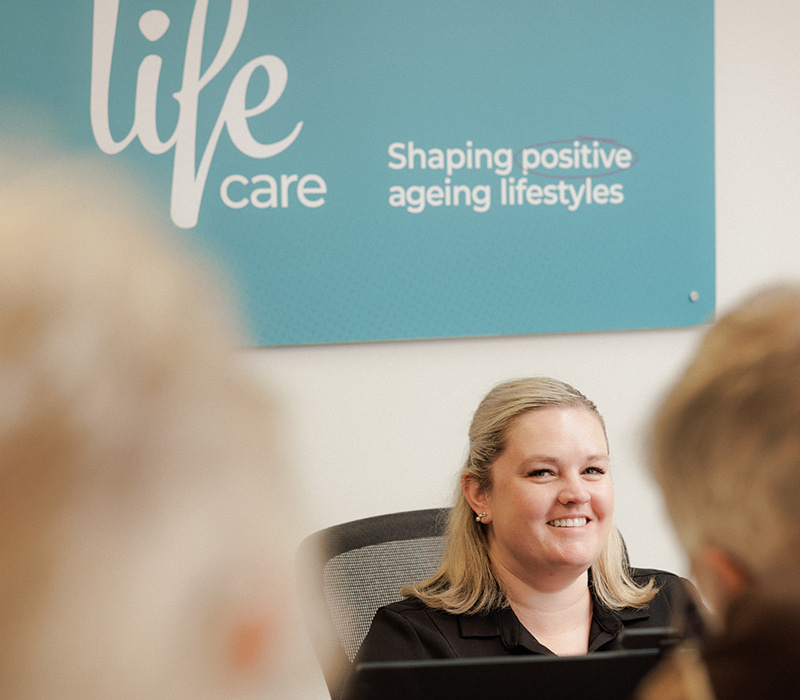
Central to this future direction is a commitment to co-designing services alongside clients.
By actively listening to the people they serve, Life Care aims to create programs that reflect real-world needs and preferences rather than assumptions.
It is an approach that mirrors the organisation’s broader philosophy: care should be built around individuals, not systems.
After 75 years of service, Life Care has proven its ability to evolve without losing sight of its purpose. As Australia’s population ages and expectations around care continue to change, the organisation is well positioned to remain a trusted partner for older Australians and their families.
The future of aged care may be changing rapidly, but Life Care’s mission remains as relevant as ever: Life Care fosters relationships of care that generate fullness of life.
As Scaffidi puts it, “We are there to support people through that journey and make sure they can live life to the fullest.”
Click The Cover To View Or Download The Brochure
AT A GLANCE
Who: Life Care
What: A leading and caring aged care services provider that focuses on purpose, dignity, and an engaging life for the elderly
Where: South Australia, Australia
Website: www.lifecare.org.au
PREFERRED VENDORS/PARTNERS

Online Path Digital Marketing – onlinepath.com.au
Online Path is an Adelaide-based digital marketing agency helping businesses grow through strategic, measurable online campaigns. With expertise across SEO & AI Search, Google Ads, social media and analytics, the team partners with organisations across healthcare, aged care, professional services and beyond to improve awareness, generate enquiries and deliver long-term growth.