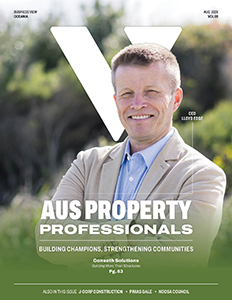

Building a Market Leader from the Ground Up
Sixteen Years of Building Something Bigger
When three business partners broke away from an existing real estate operation 16 years ago to establish Harcourts Mandurah from scratch, they were not inheriting an established portfolio or stepping into a ready-made market position. They were building a business from the ground up.
Today, that decision has developed into one of the Peel region’s standout real estate success stories. Director Paul Blakeley says Harcourts Mandurah now commands approximately 25 to 30 percent market share depending on the quarter, around twice that of its nearest competitor. Its property management portfolio has grown organically to more than 1,100 properties, without purchasing a rent roll along the way.
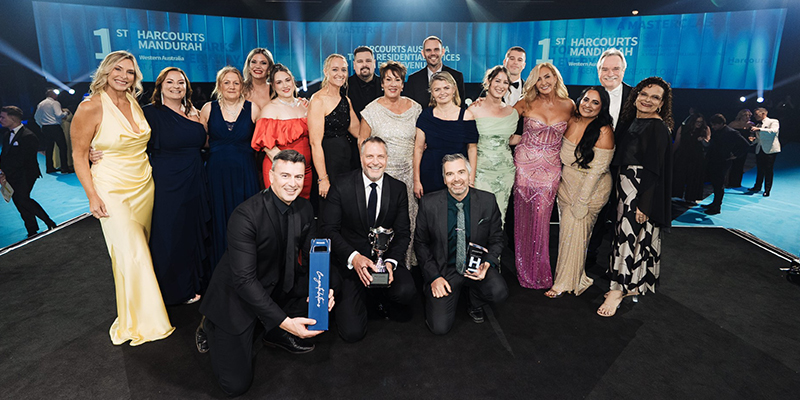
The office has also established an impressive record within the wider Harcourts network. At its recent state awards, Harcourts Mandurah was named the top office for revenue for the 13th consecutive year. Its property managers claimed the top three individual positions in the state, while the business was recognised as number one for organic property management growth and also celebrated a Rising Star of the Year award.
Nationally, the office has finished as Harcourts’ number one office for the past two years, while globally it has achieved second place within a network Blakeley describes as spanning approximately 900 offices across nine or ten countries.
“It’s turned into a bit of a strong business, and it’s been going from strength to strength. We’ve managed to maintain that for a long period of time,” Blakeley states.
People First, Performance Follows
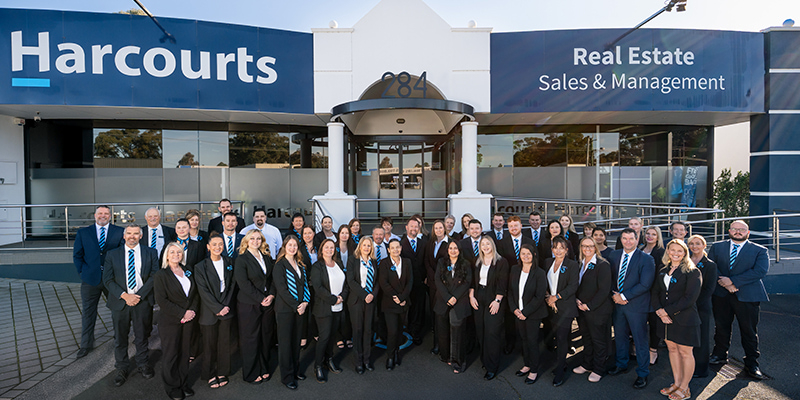
Behind those numbers is a team of approximately 60 people working across residential sales, property management, administration, property management assistance and buyer services. Although Harcourts Mandurah occasionally handles commercial transactions, residential sales and property management remain at the heart of the operation.
For Blakeley, however, the defining characteristic of the company is less about the services it provides than the culture surrounding the people delivering them.
Recruitment begins with attitude. Skills matter, but the business places particular emphasis on finding people willing to work collectively rather than operating as individuals. It is a philosophy built around shared responsibility, collaboration and a willingness to contribute wherever required.
“The biggest thing for us is culture. It’s people first. We make sure that we hire according to attitude more than anything,” Blakeley offers.
That approach extends to professional development. Blakeley joined Harcourts Mandurah five years ago after previously serving as CEO for Harcourts in Western Australia. Having worked with the office for around seven years before joining it, he already understood its strengths and where changes could help unlock its next phase.
A restructuring allowed the founding directors to reduce their reliance on personal sales production and redirect their experience into developing the wider team. Blakeley assumed greater responsibility for day-to-day operations, creating space for his fellow directors to concentrate on areas where their experience could have a broader impact.
Lee, one of the directors and an accomplished salesperson, now devotes significant attention to weekly training, one-on-one development and supporting salespeople without the pressure of simultaneously maintaining his own sales volume. Ben, meanwhile, has channeled his passion for marketing into overseeing the company’s marketing function and its two dedicated staff members.
Clare, another of the founding directors, is gradually stepping back towards retirement after helping build the company over its 16-year journey.
The result is a leadership structure increasingly focused on making other people successful.
Giving Property Management Equal Weight
One of the most significant shifts within Harcourts Mandurah has occurred in property management. Blakeley acknowledges that historically the department did not always receive the same level of attention as sales, a pattern that can be familiar across the broader real estate industry.
Over the past four or five years, that has changed dramatically.
Harcourts Mandurah began investing more deliberately in recruiting the right property management professionals, developing their capabilities and ensuring they experienced the same culture and training opportunities as the sales team. The results have been reflected in revenue, organic growth, employee quality and industry recognition.
Taking all three top property manager positions at the recent state awards provided particularly strong validation of the strategy.
“We’ve put as much emphasis on training and building that team up as we have with the sales, and that’s paid dividends.”
For Blakeley, the lesson is straightforward: sustained attention creates sustained improvement.
“Whatever you invest time in will build and grow,” Blakeley says.
That principle also helps explain how the company has built its portfolio of more than 1,100 managed properties organically. Rather than purchasing growth, Harcourts Mandurah has concentrated on creating it through its people, service and reputation.
Technology Without Losing the Human Connection
Real estate remains fundamentally personal, but the tools surrounding the profession are changing quickly. Harcourts Mandurah has introduced several new platforms in recent years while transitioning towards a paperless office and more streamlined digital processes.
Electronic contracts through platforms such as DocuSign have accelerated transactions, particularly when owners, buyers or sellers are interstate or overseas. Tasks that once required significantly more time can now be completed remotely, improving turnaround times for both the team and clients.
Artificial intelligence and other digital communication tools are also creating opportunities to maintain contact with clients in ways that previously would have been difficult at scale.
Yet Blakeley recognises that adoption requires adjustment, particularly for experienced real estate professionals whose careers were built primarily around face-to-face conversations and telephone communication. Technology, therefore, is viewed as an enhancement to personal service rather than a replacement for it.
Marketing has undergone a similar transformation.
Video, reels and social media have become increasingly important as Harcourts Mandurah encourages its sales professionals to develop recognisable online profiles. The objective is to allow prospective clients to understand an agent’s personality, communication style and approach before the first conversation even takes place.
“If you build an online profile, people get to know you before they know you,” Blakeley adds.
It represents a move away from passive marketing towards something more personal and dynamic, with the company investing in helping individual team members stand out within the marketplace.
Partnerships That Carry a Transaction Through
While Harcourts Mandurah’s internal team drives the business, Blakeley also recognises the importance of trusted external relationships.
Quality photography and signboards contribute directly to property presentation, while reliable conveyancers and finance professionals can be instrumental in successfully taking a transaction from agreement through to settlement.
The company works with established local providers it knows can deliver dependable service and quick turnaround times, while clients remain free to choose their preferred professionals.
For Harcourts Mandurah, these relationships ultimately support the same objective as its internal investment: creating a smoother path for people buying, selling, leasing or managing property.
Investing in the Next Generation
People, technology and marketing remain the company’s three major areas of investment, but people come first.
With some experienced sales professionals beginning to consider retirement or reduced workloads, Harcourts Mandurah is deliberately developing younger talent capable of carrying the business forward. The company has already experienced success in that area, but recruitment remains continuous as leadership searches for people who fit both gaps within the market and the company’s culture.
“We’re always constantly on the lookout for great people,” Blakeley states.
At the same time, its marketing department continues searching for ways to elevate the profiles of team members, while technology is being used to streamline processes and create a faster, more responsive operation.
It is a strategy that combines succession planning with modernisation: preserving the knowledge accumulated over 16 years while ensuring the business is not constrained by the methods that created its original success.
Taking the Mandurah Model Further
For the first time in its history, Harcourts Mandurah is also seriously considering geographic expansion.
The directors are investigating the possibility of expansion. What this looks like is still uncertain at this stage but the opportunity could allow Harcourts Mandurah to extend its presence and replicate elements of its successful operating model in another market.
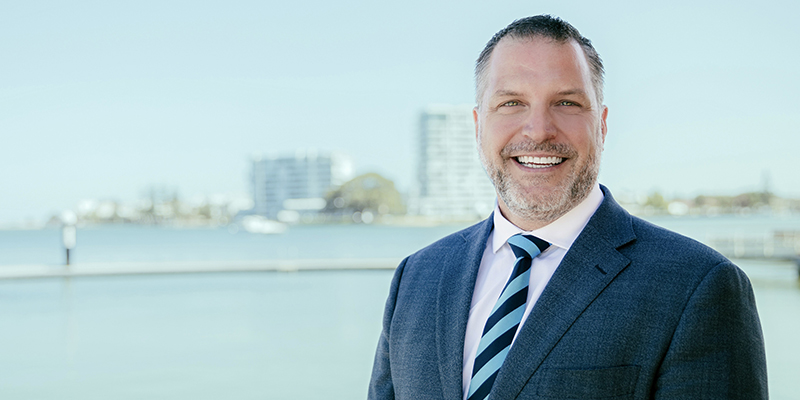
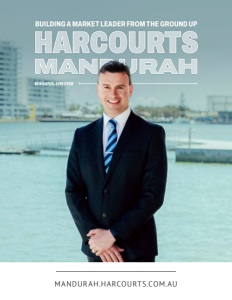
Director Paul Blakeley
The timing comes as the wider property sector faces a period of change. Blakeley points to potential regulatory and taxation changes affecting investors, evolving residential tenancy rules, interest rate movements, cost-of-living pressures and broader economic uncertainty as factors likely to influence sentiment.
Mandurah itself has experienced a buoyant property market over the past four or five years, although Blakeley is beginning to see some levelling. Stock remains limited, and the next six to 12 months will reveal more about how buyers, sellers and investors respond to changing conditions.
For Harcourts Mandurah, preparation is therefore as important as prediction. Training employees to handle more difficult conversations, maintaining communication with clients and demonstrating value will be central priorities.
Ready for What Comes Next
Sixteen years after its founders started with a blank page, Harcourts Mandurah has reached a position where growth is no longer simply about becoming bigger. It is about strengthening what already works and determining how successfully that formula can travel.
A market-leading position, an organically developed management portfolio, sustained award recognition and a 60-person team provide a strong foundation. Yet the company’s focus remains forward-facing: developing its next generation, embracing useful technology, strengthening property management, evolving its marketing and examining the possibility of a second territory.
“It’s making sure our guys are equipped to deal with those changes and have those maybe tougher conversations sooner. Making sure we show our value,” Blakeley describes.
That mindset captures much of what has carried Harcourts Mandurah from a start-up operation to an established market leader. The next chapter may take the company beyond the territory where it began, but its underlying strategy remains remarkably consistent: invest in people, build capability, adapt early and make the strength of the collective greater than any individual within it.
Click The Cover To View Or Download The Brochure
AT A GLANCE
Who: Harcourts Mandurah
What: A real estate business specialising predominantly in residential sales and property management.
Where: Mandurah and the Peel region, Western Australia.
Website: www.mandurah.harcourts.com.au
PREMIER ENTERPRISE PARTNER

Diakrit – www.diakrit.com
Diakrit is a global leader in property marketing, proudly trusted by over 2000+ real estate brands worldwide to present listings in a more informative and engaging way. Through premium visual content, including magazine quality photography, video, virtual tours, 3D floor plans, and other interactive tools, we bring homes to life, helping agents win listings and sell faster.