
H3C Plus
Enterprise-Grade Security with a Human Touch
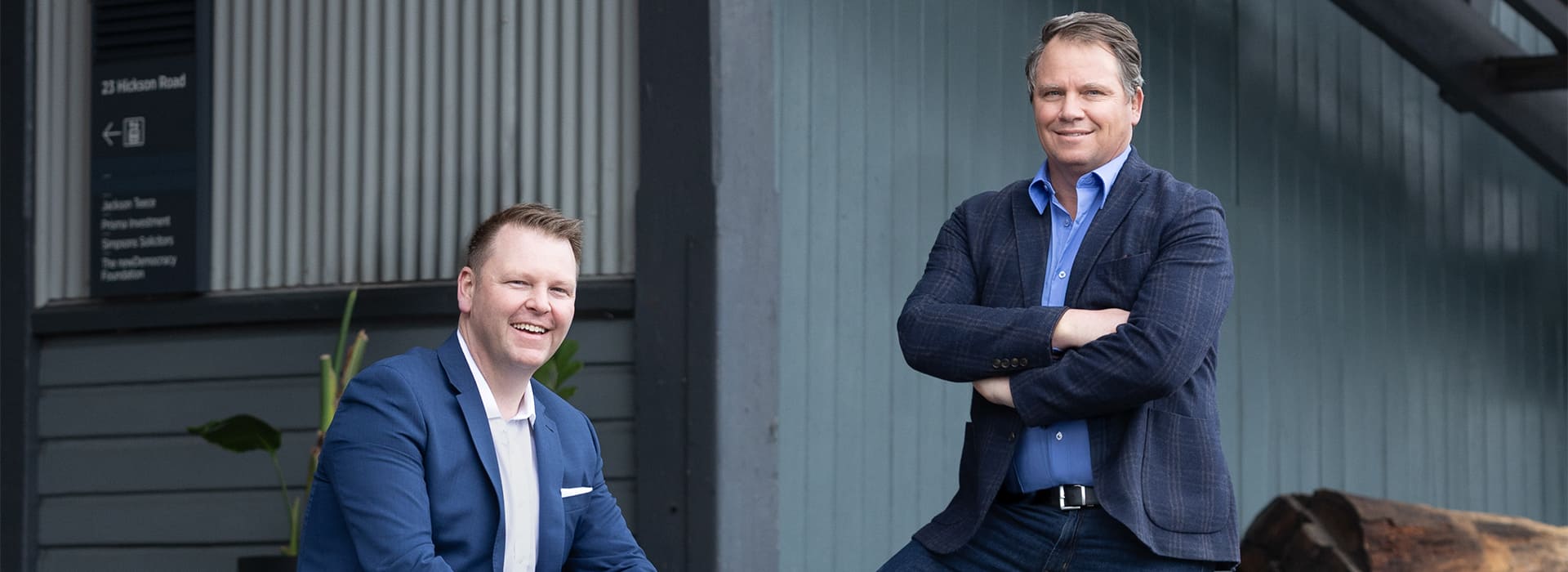
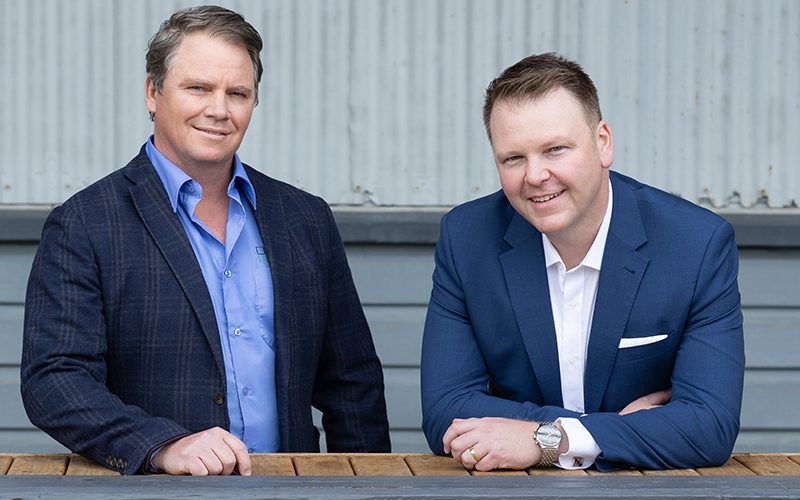
Since its inception in 2016, H3C Plus has carved out a distinctive position in Australia’s competitive security technology sector. From day one, founders Nicholas Churchill and Jonathan Hughes made a deliberate decision: H3C Plus would be built as an enterprise-level security solutions provider, focused on complex environments, mission-critical systems, and long-term partnerships.
That early positioning has shaped everything that followed. By targeting enterprise clients from the outset, the company naturally gravitated toward enterprise-grade platforms, manufacturers, and technology partners. Those choices, in turn, helped attract experienced technical, operational, and sales talent who wanted to work on challenging projects with national and global impact. Today, H3C Plus employs around eighty staff across Australia, with a growing presence in key markets and a reputation for being large enough to handle complex portfolios but agile enough to stay personal.
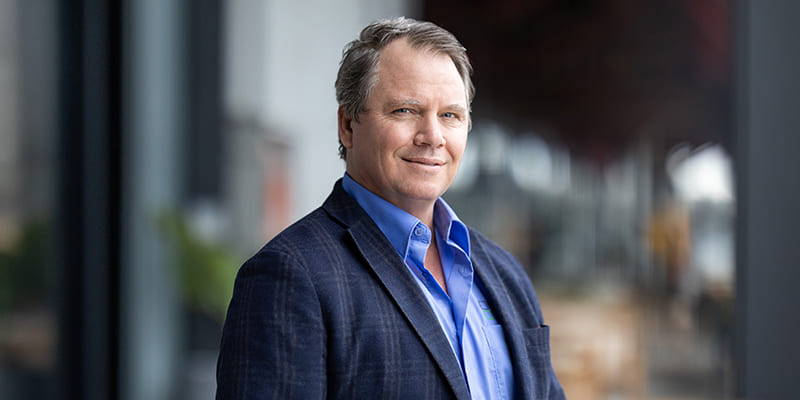
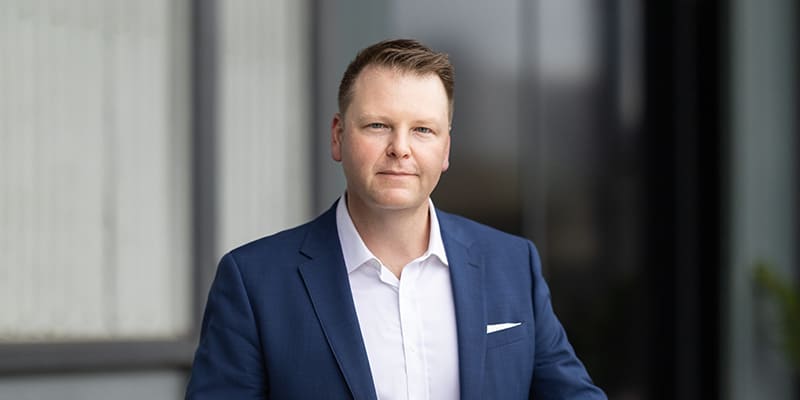
Churchill describes that evolution as intentional rather than accidental. The decision to operate at the enterprise end of the market has driven the calibre of systems the company deploys, the verticals it serves, and the people it employs. Hughes adds that the company has layered disciplined operational frameworks on top of this base, drawing on his own background in top ASX-listed environments to instill a rigor around standards and compliance that is still relatively rare in the security integration space. The company is now built in each branch, with these systems.
At the heart of those frameworks is a centralized, documented system of processes and compliance standards that everyone in the organisation understands and works within. That consistency, he notes, eliminates a lot of unnecessary repetition, raises the overall standard of delivery, and keeps performance at what he calls an industry-leading level.
A Family Business with Enterprise Credentials
Culture sits alongside capability as a defining feature of H3C Plus. The company is a registered Australian family business, and Churchill is quick to point out that this is more than a label. The family-owned structure informs how decisions are made, how people are treated, and how the organisation shows up for clients.
Despite operating at scale and delivering to some of the most demanding environments in the country, H3C Plus works hard to remain grounded. The founders talk about keeping “two feet on the ground” and making sure that, beneath the projects and platforms, everyone remembers they are dealing with people. They are unapologetically down to earth: big enough to match the “big five” or “big six” integrators in delivery capacity, but small enough to maintain camaraderie, flexibility, and genuine care.
That mix has proven attractive to staff. Many people join the business because they are looking for a place that combines serious, enterprise-level work with a more human scale and culture. The result is a supportive environment where team members feel good about what they do and know they are part of a family-based organisation rather than a distant global conglomerate. That sense of belonging, in turn, feeds back into service quality and client relationships.
End-to-End Service Mentality
If there is one phrase that captures H3C Plus’ operating model, it is “end-to-end service provision.” Rather than segmenting the business into either large tier-one projects on one side or minor service contracts on the other, H3C Plus views each organisation as a total client. When clients need a major rollout, the capability is there. When they need something seemingly small, the same level of responsiveness and care applies.
Hughes explains that the company has embedded a service mentality across every department, branch, and role. From business services to field technicians, from engineering to sales, the expectation is that everyone leans in to support the client’s security technology landscape as a whole. Over the past decade, H3C Plus has invested heavily in internal information management systems to support this model. Those systems give the team the visibility and control they need to act quickly, accurately, and consistently, whether they are supporting a site across town or a facility on the other side of the world.
An important part of that capability is the company’s remote managed services function, referred to internally as RMS. This technical team is able to address a wide range of system adjustments and issues remotely, providing support to clients across Australia and in international locations such as New Zealand, Asia, Europe, the United Kingdom, and the United States. For clients running critical infrastructure, multi-site portfolios, or geographically dispersed assets, that remote capability is invaluable.
Navigating Industry Change: IP, Cloud, and Consolidation
The security technology landscape has been undergoing a profound transformation for more than two decades, and H3C Plus has been careful to stay ahead of those shifts. The move from traditional wired systems to IP-based and digital platforms has changed how devices are connected, how data is stored, and how systems are managed. Where once most equipment and infrastructure was hardwired and discrete, today the emphasis is on networks, cloud relationships, wireless connectivity, and software-defined functionality.
One of the major trends Churchill highlights is the consolidation of systems. Historically, organisations would run separate platforms for CCTV, access control, alarms, intercoms, duress systems, and other security functions. Increasingly, particularly in high-end enterprise environments such as power distribution plants, major commercial buildings, motorways, and large retail assets, there is a drive to bring these functions together under a unified platform. Consolidation simplifies management, improves situational awareness, and allows for more intelligent use of data.
Overlaying that consolidation is the accelerating growth of artificial intelligence and advanced analytics. Over the last three years, especially post-pandemic, AI has become one of the most talked-about forces shaping the electronic security industry. In practice, that translates into smarter video analytics, more sophisticated event detection, and more efficient use of human attention. For H3C Plus, that means investing in deep technical understanding, ongoing training, manufacturer certifications, and carefully selected partnerships to ensure the team can design, deploy, and support AI-enabled systems effectively.
Cloud-based solutions are another piece of the puzzle. While cloud storage and cloud-managed platforms have been discussed in the industry for more than a decade, widespread adoption in high-security environments has been constrained by cost and, more importantly, by data sovereignty and information security concerns. In Australia, in particular, organisations are increasingly focused on ensuring that sensitive data is stored within sovereign borders, often in specific types of data centres. H3C Plus sees opportunities emerging in cloud and hybrid models but is careful to balance innovation with the stringent security expectations of its client base.
The convergence of security technology with ICT infrastructure is also gathering pace. Bringing security systems onto core networks, integrating with switches and backbone infrastructure, and leveraging shared cabling and communications systems can deliver cost and efficiency benefits. It also demands close collaboration with ICT teams and a deep understanding of networking disciplines. H3C Plus has embraced this convergence as part of its operating reality, ensuring its engineers and technicians are comfortable on both sides of the traditional security–ICT boundary.
Managing Risk: ISO 27001 and Information Security
As systems become more interconnected and data-rich, the stakes around information security grow ever higher. Whether it is video footage, access logs, or system credentials, the information associated with modern security systems is highly sensitive. H3C Plus recognised early that it needed to demonstrate not only technical capability, but also robust governance around how it handles that information.
To that end, the company implemented and maintains certification to ISO 27001, the international standard for information security management systems. This standard wraps around H3C Plus’ operations across all branches and functions, setting clear requirements for how client data is stored, accessed, protected, and managed. It is a critical enabler of the company’s work in high-security environments, including defence, federal and state government, and other agencies for whom data security is paramount.
Churchill emphasises that ISO 27001 is not just a badge; it is part of the company’s operating fabric. It governs not only how data is stored on client sites but also how information is managed within H3C Plus as an installer, integrator, and solutions provider. Combined with strong relationships with ICT teams and manufacturers, this standard helps ensure that the modern possibilities offered by AI, IP-based systems, cloud technology, and network integration do not come at the expense of security.
Partnerships, Agnostic Solutions, and Market Reach
Partnerships sit at the core of H3C Plus’ value proposition. From its earliest days, the company has surrounded itself with market-leading global manufacturers across CCTV, video management software, access control, integration platforms, and related technologies. These relationships are not limited to a single brand or product line. Instead, H3C Plus has deliberately positioned itself as product agnostic, maintaining robust alliances with dozens of enterprise-level manufacturers and distributors.
This approach gives the company the flexibility to design bespoke, best-fit solutions for clients across multiple sectors and verticals, rather than forcing a one-size-fits-all technology stack. It also makes H3C Plus an attractive integration partner for those manufacturers, who rely on skilled, credible integrators to champion their platforms in the field and deliver successful outcomes.
The result is a virtuous circle. Strong manufacturer relationships unlock access to complex opportunities in infrastructure, government, healthcare, and other critical sectors. Successful delivery reinforces trust with both clients and partners. That trust, in turn, fuels growth.
Geographically, H3C Plus maintains a particularly strong footprint along Australia’s east coast, with branches in Sydney, Melbourne, Canberra, and Brisbane supporting a national client base. The company is actively exploring further expansion, with interest in regions such as the Central Coast, the Hunter, Perth, Adelaide, and the Northern Territory. Internationally, it already supports clients with presence in New Zealand, Singapore, the United Kingdom, the United States, and other markets, aligning its capabilities with the global footprints of enterprise customers.
A Deliberate Future: Mission and Ambition
H3C Plus has formalised its aspirations in a clear mission and set of objectives. Internally, the group mission is to empower clients to reach their security technology goals through service, partnership, and intelligence, one device at a time. It is a statement that captures both the company’s enterprise-level ambition and its attention to detail. Each device matters, each configuration matters, each interaction matters.
The company has set itself the objective of becoming the leading security integration provider in Australia, on both east and west coasts, by 2028. Looking further ahead, it aims to secure significant market share in Southeast Asia and the Pacific by 2030. Those goals are ambitious but, in the founders’ view, achievable through the same deliberate, disciplined approach that has characterised the first decade of the business.
Hughes describes H3C Plus as a modern security service provider in both culture and operation, not an old-line integrator relying on legacy presence. Many companies of similar capacity have been around far longer, he notes, but H3C Plus’ growth has come from intentional choices about how to manage sales, operations, and client relationships in a contemporary way. Churchill underscores that the company’s bespoke integration capability, its agnostic stance, its deeply embedded partnerships, and its strong technical base give it a foundation that is both robust and scalable.
Underneath the enterprise platforms, certifications, and international reach, however, the core identity remains simple: a family-owned, Australian business that takes pride in serving its clients well. In an industry defined by risk, complexity, and rapid change, H3C Plus has built a model where operational excellence, technological intelligence, and human connection all have a place.
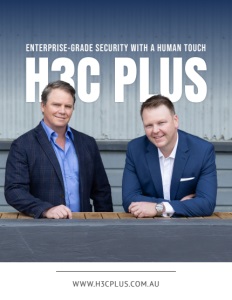
Click The Cover To View Or Download The Brochure
AT A GLANCE
Who: H3C Plus
What: enterprise-level security solutions provider, focused on complex environments, mission-critical systems, and long-term partnerships
Where: Sydney, Australia
Website: www.h3cplus.com.au
PREMIER ENTERPRISE PARTNER

Avigilon – www.avigilon.com
This commitment to smart security is demonstrated by Visual Alerts in Avigilon Unity Video 8, Avigilon’s first-of-its-kind on-premise Generative AI technology. This powerful tool enables security teams to define custom, text based alerts for complex scenarios. Operators type a prompt (e.g., “car on fire in the parking lot”) and the system instantly transforms raw video into actionable intelligence, significantly enhancing proactive threat detection and response.