
Building Champions, Strengthening Communities
Creating One of the World’s Most Unique Sporting Ecosystems by Giving Everyday Australians Access to the Same World-Class Facilities Used by Elite Athletes.
For most people, the world’s greatest sporting venues exist behind barriers. They are places reserved for professional athletes, international competitions, and major televised events. The public may fill the grandstands, but they rarely step onto the court, dive into the pool, or run on the track.
Victoria’s State Sport Centres have quietly rewritten that narrative.
On any given day, an Olympic swimmer may complete a training session before a local family arrives for an afternoon swim. International netball players may finish preparing for a national competition before school children take over the same courts.
That extraordinary accessibility is what sets State Sport Centres apart from virtually every comparable sporting precinct in the world. Rather than separating elite sport from community participation, the organisation has deliberately built an operating model where both exist side by side, creating facilities that inspire participation while supporting Australia’s highest-performing athletes.
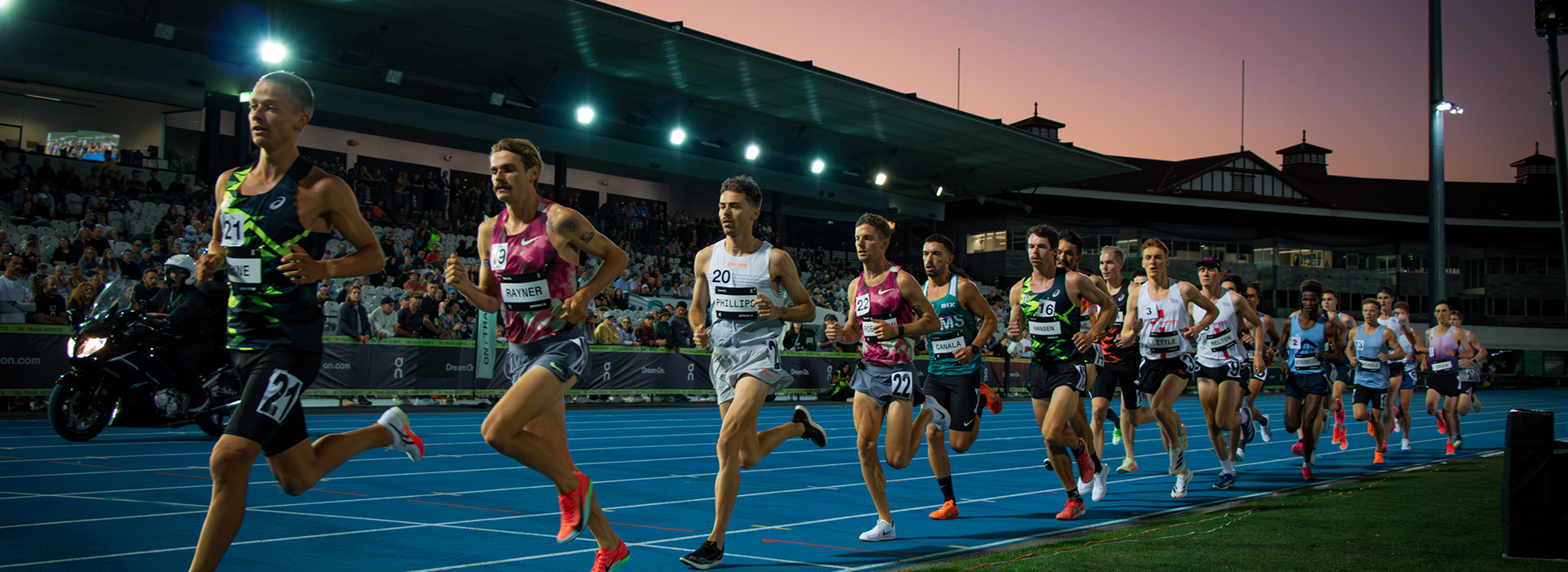
“We provide these world-class facilities for access to everyday people, and that’s our unique proposition,” says Chief Executive Officer Kate Roffey. “You can come and swim in the same pool that Ariarne Titmus has just set a world record in. You can run on the same track that Gout Gout runs on if you’re a Little Athletics participant, or if you’re just a recreational runner.”
That philosophy has shaped every stage of the organisation’s growth, transforming what began as a single aquatic centre into one of Australia’s most significant sporting infrastructure portfolios.
From One Aquatic Centre to a Statewide Sporting Network
The story of State Sport Centres began in 1994 with the construction of what was then known as the Melbourne Sports and Aquatic Centre. Completed in 1995, the facility immediately established itself as one of Australia’s premier indoor aquatic and indoor sporting venues.
Growth followed as Victoria’s sporting ambitions expanded.
An outdoor international-standard pool was added ahead of the 2006 Commonwealth Games, allowing Melbourne to host world-class swimming events while simultaneously providing the essential warm-up facilities required for international competition.
For Roffey, however, the facilities themselves are only part of the story.
“They’re world-class standard, all of them, but they’re used by the community,” Roffey explains.
Designing Facilities That Never Stand Still
Few sporting organisations operate venues that change character as frequently as those managed by State Sport Centres.
Swimming pools can shift between 25-metre and 50-metre configurations through sophisticated movable boom technology. International diving facilities sit alongside leisure pools, learn-to-swim areas and athlete recovery pools. Outdoor pools can be reconfigured to accommodate multiple forms of aquatic competition.
The flexibility extends far beyond aquatics.
Within the Melbourne Sports and Aquatic Centre alone, sports halls can transition from table tennis championships in the morning to volleyball tournaments in the afternoon before being converted once again for basketball or badminton.
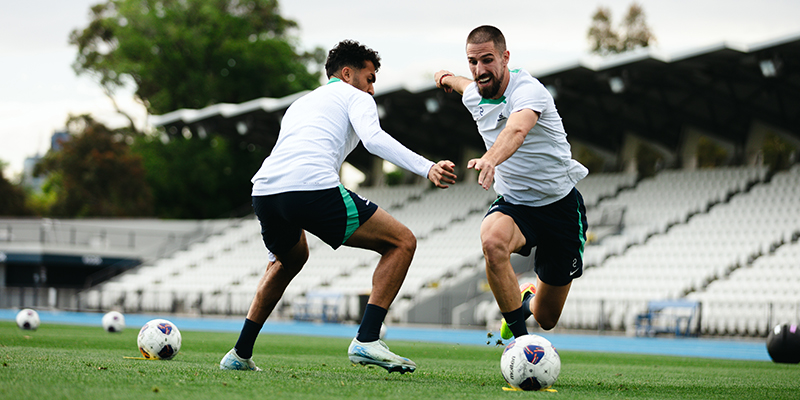
Meanwhile, Lakeside Stadium undergoes a seasonal transformation. During winter, football takes priority. In summer, athletics dominates the calendar. Throughout the year, the Victorian Institute of Sport utilises the venue for high-performance training while community groups continue to enjoy regular access.
This operational flexibility demands extensive planning and an exceptional level of logistical coordination.
“We can go from hosting the Maurie Plant Meet, which is a major international athletics meet one night, and then have a little athletics carnival on Sunday morning,” Roffey says. “We regularly do that.”
Where Elite Performance Meets Community Participation
Perhaps the most remarkable aspect of State Sport Centres is not the scale of their infrastructure but the philosophy behind how that infrastructure is used.
Many elite sporting facilities around the world are protected environments reserved exclusively for professional athletes. Community users are often excluded entirely.
State Sport Centres deliberately reject that model.
Its facilities accommodate elite athletes preparing for international competition while simultaneously providing access for school groups, recreational participants, local sporting clubs and families seeking healthy, active lifestyles.
Maintaining that balance is neither simple nor inexpensive.
International-standard swimming pools require highly specialised water treatment systems, tightly controlled temperatures and meticulous chemical management to ensure they remain suitable for world-record performances. Those standards come at considerable operational cost.
Yet Roffey believes the investment delivers benefits far beyond elite sport.
“We have very fast swimming pools,” she says. “Even people who are just general swimmers will come up to me and say, ‘These are really fast pools.’ Dawn Fraser came to visit us during the World Short Course Championships and said, ‘Wow, these are fast pools.”
Maintaining those standards allows ordinary Victorians to experience facilities that would normally only be available to the world’s best athletes.
“It’s a really unique proposition that everyday people get to use world-class venues,” Roffey says. “If we took our venues away, there would just be much less accessibility for people who participate regularly.”
Innovation Supporting World-Class Competition
While the organisation focuses primarily on providing exceptional facilities rather than coaching athletes directly, innovation remains central to its operations.
One of the most significant recent developments has been the introduction of advanced Hawkeye technology for swimming.
Building upon the technology familiar to tennis audiences worldwide, the swimming system enables officials to accurately assess starts, finishes and race movements using sophisticated visual tracking rather than relying solely on human judgement.
For athletes competing at the highest levels, fractions of a second can determine medal positions. Technologies such as Hawkeye improve both fairness and confidence in competition outcomes while positioning Victoria at the forefront of sporting innovation.
“We’re trying to create opportunities for technology advancements in our venues,” Roffey explains. “The Hawkeye swimming system takes that technology and uses it so that you don’t have to rely on a judge standing on the pool deck. That’s a significant introduction of technology in our venue, and it’s now being used nationally.”
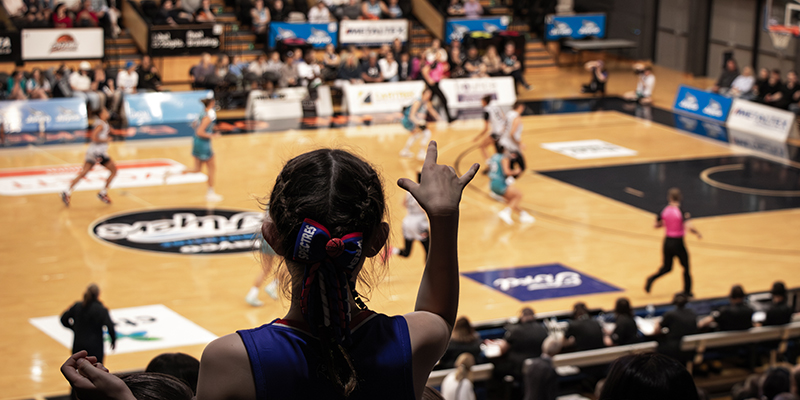
The organisation also supports high-performance environments by providing elite training gyms, recovery facilities and specialist sporting infrastructure used by professional teams including the Melbourne Vixens, Melbourne Mavericks and South East Melbourne Phoenix. While sporting organisations manage their own athlete performance systems, State Sport Centres ensure the venues themselves enable world-class preparation.
Partnerships That Power Victorian Sport
The scale and diversity of State Sport Centres would not be possible without an extensive network of partnerships that spans virtually every major sporting code in Victoria. Rather than viewing sporting organisations as tenants simply hiring facilities, the organisation has deliberately cultivated collaborative relationships that place shared outcomes ahead of commercial transactions.
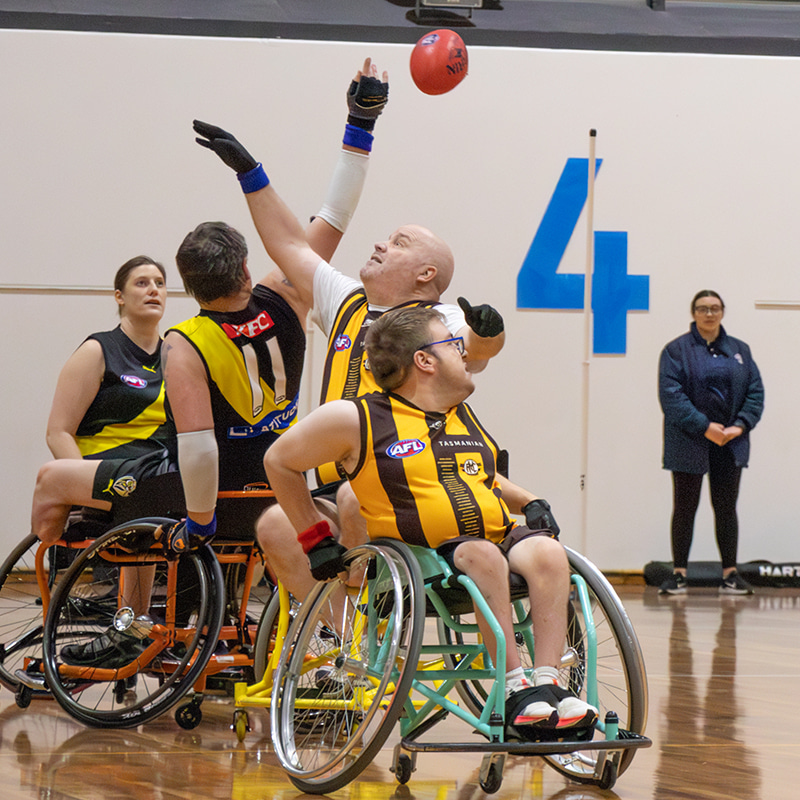
Swimming Victoria, Basketball Victoria, Netball Victoria, Hockey Victoria and Athletics Victoria all rely on the centres to deliver competitions, development pathways and participation opportunities. National sporting organisations, including Swimming Australia and Table Tennis Australia, also utilise the venues, while the Victorian Institute of Sport calls Lakeside Stadium home for many of its high-performance programs. Paralympic athletes likewise train within the network of facilities, reinforcing the organisation’s commitment to supporting excellence across every level of competition.
“We are here for them,” Roffey says. “They’re not tenants. They’re not people who just use our facilities; they are significant partners. We provide as much access as we can to our venues so that our sports partners can drive participation and promote high-performance pathways.”
That partnership philosophy extends into schools, community organisations and emerging sports, ensuring that the centres remain relevant to both today’s participants and tomorrow’s athletes.
Behind the Scenes of a Sporting Powerhouse
Visitors often notice the pristine courts, sparkling pools and world-class competition environments, but few appreciate the enormous workforce required to keep such complex facilities operating every day.
Approximately 1,500 employees support State Sport Centres across multiple venues, working extended operating hours that often stretch beyond sixteen hours each day. Lifeguards, duty managers, venue operations staff, maintenance specialists and technical experts all play essential roles in delivering safe, seamless experiences for millions of annual visitors.
The highly specialised nature of the facilities also requires expertise rarely found elsewhere. Beneath the swimming pools, sophisticated filtration, heating and water treatment systems operate continuously, requiring dedicated personnel whose work is largely invisible to visitors but essential to elite competition standards.
“We have around 1,500 staff,” Roffey explains. “The venues can open if I’m not there, but they can’t open if the lifeguards and the duty managers aren’t there. We must have this significant front-of-house workforce.”
Supporting that workforce is a culture built around excellence, teamwork, customer service, and safety. Every decision, whether customer-facing or behind the scenes, reflects the organisation’s commitment to providing exceptional experiences for athletes and community members alike.
 “Our customers come first,” Roffey says. “We’re here to provide the best services we can for them. We want their experiences in our venues to be of the highest standard and as seamless as possible.”
A Model Worth Sharing
Perhaps the strongest endorsement of State Sport Centres comes not from attendance figures or international competitions, but from those who experience the facilities firsthand.
Roffey recalls speaking with fellow government leaders about the organisation’s operating model, explaining how elite athletics one evening could become community participation the following morning. One colleague later visited Lakeside Stadium and witnessed young athletes competing on the same track recently used by Australia’s fastest runners.
The experience changed his understanding of the organisation’s value.
For Roffey, moments like that reinforce why State Sport Centres exist.
Rather than separating high performance from participation, the organisation has created an ecosystem where elite achievement inspires everyday involvement, and community access helps sustain world-class infrastructure that benefits everyone.
“I don’t think people understand the uniqueness of our venues,” Roffey says. “We do everything from professional sport and elite sport right through to you and I being able to go and book a table tennis table and play for an hour at lunchtime. It’s a unique worldwide proposition.”
As demand for sporting participation continues to grow, balancing access with capacity will remain one of the organisation’s greatest challenges. Emerging sports such as pickleball compete alongside long-established codes for limited venue space, while schools, elite athletes and community organisations all seek greater access.
Yet the mission remains unchanged.
Every redevelopment, every technological innovation, and every operational improvement ultimately serves the same purpose: ensuring that world-class sporting environments remain open not only to champions, but to every member of the community with a desire to participate.
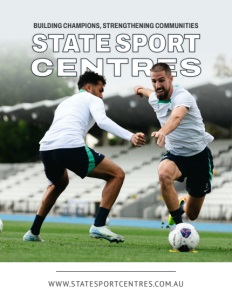
Click The Cover To View Or Download The Brochure
AT A GLANCE
Who: State Sports Centres
What: Victoria’s premier operator of world-class sporting and aquatic facilities, delivering elite competition venues while providing everyday community access to international-standard infrastructure.
Where: Melbourne, Victoria, Australia.
Website: www.statesportcentres.com.au
PREFERRED VENDORS/PARTNERS

Cirka Group Pty Ltd – www.cirka.com.au
Cirka Group Pty Ltd is a 100% Australian family-owned business, operating nationally with headquarters in Melbourne and 37+ years’ experience in the cleaning and facility services industry. Cirka has grown from humble beginnings in 1988, to a trusted and respected provider of quality cleaning services to premium clients across broad industry sectors.

SEC – www.secvictoria.com.au
SEC is a government-owned renewable energy company. We’re helping to accelerate Victoria’s renewable energy transition by investing in wind, solar and storage. We’re also supporting Victorian commercial and industrial businesses, retailing 100% renewable electricity and working with them on renewable energy solutions to lower energy costs, build resilience and reduce emissions.