
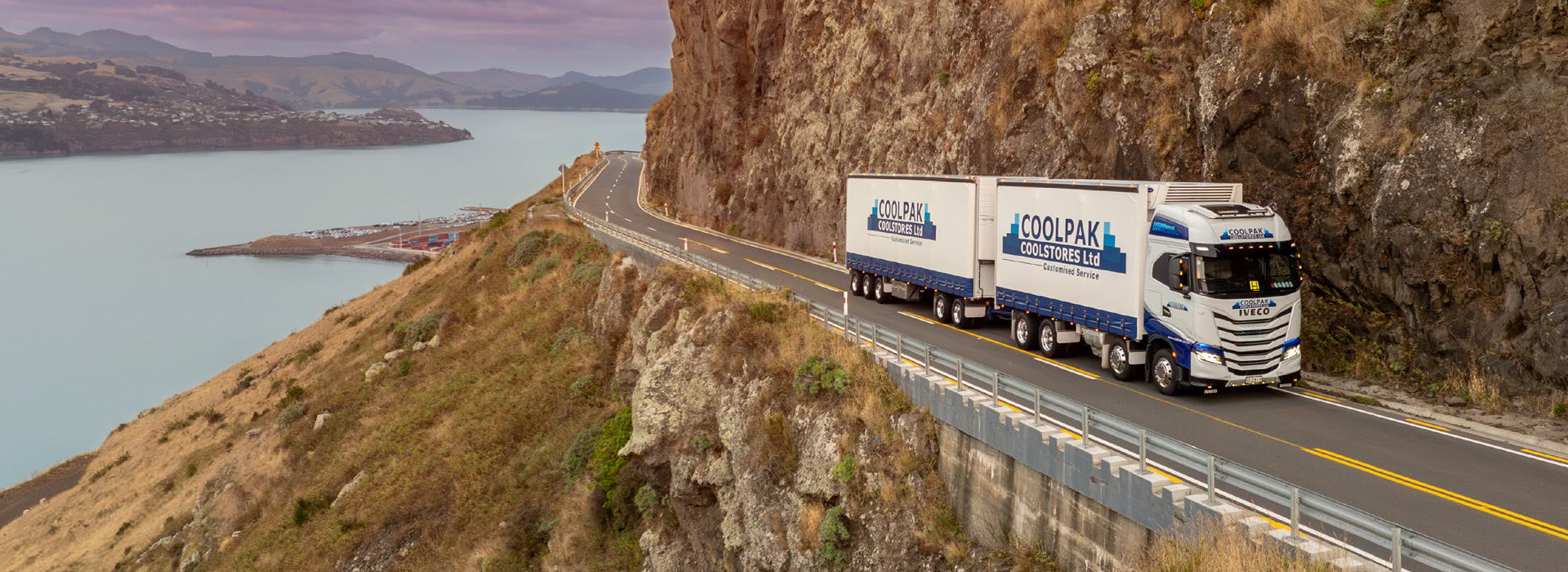
Building Capability for a Changing Industry
Advancing Education, Leadership, and Industry Connections Across the Logistics and Transport Sector
In a 24/7 industry defined by movement, complexity, and constant change, the Chartered Institute of Logistics and Transport New Zealand is focused on ensuring the people within the sector are equipped to lead it forward. As part of a globally respected professional body with more than a century of history, CILT New Zealand plays an important role in raising standards, supporting professional development, and strengthening the voice of logistics and transport across the country.
At a time when the sector is facing rapid technological advancement, climate/political-related disruption, infrastructure challenges, and shifting workforce dynamics, the organisation is evolving to remain relevant, practical, and future-focused. For CILT New Zealand, this means investing in education, expanding pathways into the profession, and creating meaningful opportunities for connection across the industry.
CILT New Zealand is part of the wider Chartered Institute of Logistics and Transport, headquartered in London and represented through branches around the world. In New Zealand, the organisation has a long history of supporting the logistics and transport profession and is approaching seven decades of service in the local market. Its purpose is both broad and highly practical: to raise the profile of logistics and transport, support the people who work within the sector, consult across the wider logistics industry, and provide educational advice and opportunities that help members advance throughout their careers.
That mission is particularly significant in a field as diverse as logistics. Membership spans across all modes like ports, rail, road transport, warehousing, infrastructure, air freight, and trade, bringing together both corporate and individual members from across the supply chain. The result is an organisation with a uniquely cross-sector view of how goods, services, and systems move through New Zealand and beyond.
As President Suhail Sequeira explains, the organisation exists to support people working throughout the industry while helping ensure the sector’s voice is heard. That includes not only creating learning opportunities, but also connecting professionals to global best practices, emerging trends, and the wider conversations shaping transport and logistics internationally.
CILT New Zealand offers individual and corporate memberships. Membership trends over recent years reflect the broader workforce shifts. Fewer younger professionals engage with formal membership bodies, while corporate membership has strengthened. More organisations are recognizing the value of joining, seeing CILT New Zealand as a platform that helps develop talent, build leadership capability, and strengthen the sector overall. That growing corporate involvement speaks to a wider understanding that the industry is stronger when it collaborates and shares knowledge.
The breadth of expertise within the organisation also gives it unusual depth. Sequeira, whose current day-to-day role is with the Port of Auckland, brings a perspective not only from maritime logistics, but also from his supply chain and international logistics experience at DHL and Kuehne + Nagel. In a country where the overwhelming majority of trade moves through seaports, he sees education and systems-level understanding as essential. Ports do not operate in isolation; they are deeply dependent on freight forwarders, trucking companies, exporters, importers, and the wider logistics chain. That interconnectedness makes it essential for leaders and professionals alike to understand not only their own piece of the network, but how the entire system functions together.
That systems-level thinking is one of CILT New Zealand’s core strengths. Through its international network, members can learn from how logistics challenges are being addressed in other countries and consider whether those approaches can be adapted to the New Zealand context. For a geographically distant nation whose economy relies so heavily on trade, that global perspective is not just valuable — it is vital.
Leeanne Anderson, Vice President, sees one of the biggest current shifts through the lens of road freight transport. In her view, the industry is moving rapidly from an environment built primarily on operational know-how to one that increasingly depends on advanced systems capability. Technology is now embedded in daily transport operations, from freight handling and dispatch to compliance, customer visibility, and performance management. As those systems become more sophisticated, the challenge is no longer just adopting technology, but ensuring people know how to use it well.
That is where CILT New Zealand’s educational role becomes increasingly important. The opportunity is not simply to digitise transport, but to help people interpret data, turn information into insight, and use those insights to make better operational and strategic decisions. For Anderson, the key issue is how to upskill the workforce so that employees become both confident and competent with systems and technology, rather than relying solely on traditional, experience-based methods.
Artificial intelligence is already becoming part of that conversation. Although still in the early stages of business adoption, AI is emerging as one of the defining issues facing transport and logistics. Sequeira is careful to frame it, not as a cure-all, but as a tool — one that can help identify trends, improve decision-making, increase productivity and support more informed business outcomes when used properly. He also emphasizes that people remain central.
Experience and professional judgment are still needed to distinguish useful insight from error, particularly in a fast-moving environment where AI can generate as much noise as value if left unchecked. This balanced approach reflects the organisation’s broader philosophy. CILT New Zealand is not chasing technology for technology’s sake. Rather, it is focused on helping members understand both the opportunities and the pitfalls, so they can implement new tools thoughtfully and effectively. That includes drawing on international resources, professional articles, and shared learning across the global CILT network.
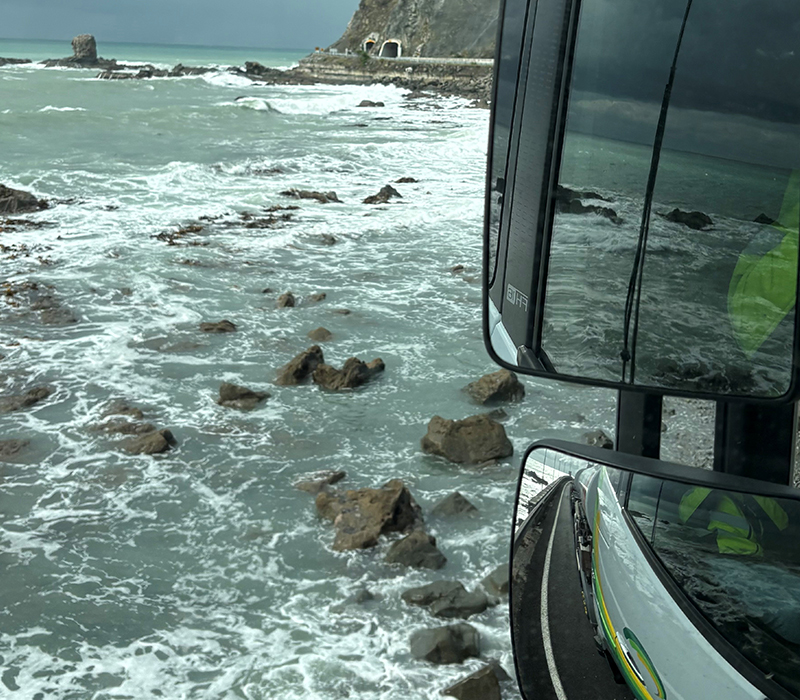
For Immediate Past President and Treasurer Diane Edwards, one of the most pressing issues is climate change and its direct impact on infrastructure and logistics resilience. In New Zealand, extreme weather events or natural disasters are common and are already affecting the sector in very real ways. Flooding, wind events, landslides and storm damage have disrupted roads, bridges, ports, and airports, underscoring the vulnerability of transport systems to environmental pressure. In some cases, entire logistics corridors can be compromised simply because a bridge is gone, or a road is no longer passable.

From her perspective, the sector must think beyond immediate operations and consider long-term resilience. This is especially important in a country where infrastructure must serve both major freight routes and smaller, more remote communities. For road and bridge builders, that means designing and maintaining assets that can withstand increasingly severe conditions while still supporting the uninterrupted movement of goods.
Policy and planning also loom large. New Zealand planning laws remain a significant factor in shaping how infrastructure projects move forward in New Zealand. For logistics and transport, this creates both constraints and opportunities.
While environmental safeguards and stakeholder engagement remain essential, lengthy approval processes can slow the delivery of critical infrastructure and undermine long-term resilience. More recent fast-track consenting mechanisms have helped advance major projects, offering an example of how better alignment can improve outcomes across the system.
Decarbonisation is another major theme. While there may not yet be a single road transport policy that addresses it directly and comprehensively, a wide array of emissions-reduction plans, incentives, and climate initiatives are shaping the industry’s direction. The challenge, as members point out, is that the transition is complex and expensive. New Zealand’s geography, population scale, and infrastructure limitations all make widespread adoption of alternative energy solutions more difficult.
Still, the momentum is real. Interest in green hydrogen is growing, and hydrogen-powered trucks alongside electric trucks, an electric empty container hoist, and an electric tugboat are already operating in the country. Companies are increasingly exploring alternative fuel options, even as the supporting infrastructure — including charging and fueling stations — remains incomplete in many areas. This is precisely the kind of space where informed leadership and knowledge sharing become critical, and where CILT New Zealand believes it can add value.
Connecting members and engaging them is a central part of the organisation’s focus. CILT New Zealand uses digital communication channels, including LinkedIn, email, and regular publications, but its strength lies equally in face-to-face engagement. Meetings in key centers, networking evenings, site visits, and events all help foster the kind of interaction that creates professional value beyond formal education.
Among the most successful newer initiatives are the organisation’s “on the couch” events, which function like fireside chats with senior leaders and industry captains. These sessions have resonated especially well with younger professionals, offering practical insights, career guidance, and candid conversations about leadership, innovation, and organisational transformation. They also help bridge the gap between generations, allowing emerging talent to hear directly from those who have built long careers within the sector.
That intergenerational exchange is further strengthened through the organization’s mentoring efforts. Because CILT New Zealand is volunteer-led, its programs are shaped by professionals who are deeply invested in the future of the industry. Members give their time not only to support the organisation, but also to help bring others along. That spirit of giving back is one of CILT New Zealand’s defining features and reinforces its role as both a professional network and a leadership platform.
Education, however, is where perhaps the most significant evolution is taking place. Historically, CILT had a strong focus on university-level study, but the organisation is now rethinking how people enter and progress through the profession. Rather than assuming a degree must come first, CILT New Zealand is increasingly interested in flexible, accessible learning/training pathways, including micro-credentialing and practical entry points into the industry. The goal is to make logistics and transport more visible as a career path and to provide multiple routes for people to build expertise over time.
This shift reflects a broader reality in the sector. Logistics is often underestimated as a profession, yet it offers significant scope for advancement and specialisation. By making those opportunities more visible and more accessible, CILT New Zealand hopes to attract new talent and help address the leadership and capability gaps emerging across the industry.
Looking ahead, the organisation sees the next decade as a defining period for transport and logistics. Decarbonisation pressures, technology disruption, supply chain/productivity challenges, infrastructure renewal, geopolitical uncertainty, and workforce development will all shape the future of the sector. In that environment, CILT New Zealand intends to remain a trusted, independent voice that brings people together, supports better thinking, and promotes long-term capability over short-term fixes.
Its priorities are clear: to grow and diversify membership, deepen engagement, strengthen leadership and governance capability, and continue developing the skills base the sector will need for the future. More than anything, the organisation wants to help professionals navigate complexity with confidence and to ensure that the systems keeping New Zealand moving remain supported by informed, capable, and connected people.
For an industry that touches every corner of the economy, that mission could not be more important. As logistics and transport continue to evolve, CILT New Zealand is positioning itself not only as a professional body but as a catalyst for the next generation of industry leadership.
Click The Cover To View Or Download The Brochure
AT A GLANCE
Who: Chartered Institute of Logistics and Transport New Zealand
What: The professional body that supports and educates for the logistics and transport sector throughout New Zealand as a vital segment of the economy
Where: Auckland, New Zealand
Website: www.cinch.org.nz