
A Logistics Success Story
Building the Backbone of Modern Supply Chains
Most people rarely think about containers. They pass them on highways, glimpse them on wagons at railway crossings, and see them lining ports around the world without giving them a second thought. Yet behind almost every supply chain, construction project, and infrastructure development lies a logistics network dependent on these seemingly simple steel boxes.
For SCF, containers are far more than transport equipment. They are the building blocks of modern commerce, flexible assets capable of adapting to changing market demands and supporting critical industries across Australia and New Zealand.
Founded in 1992, SCF began with a straightforward but innovative concept. Rather than relying solely on road transport for interstate furniture removals, the company recognised an opportunity for its furniture removal customers to utilise rail more effectively. By loading furniture into containers and moving those containers via rail, removal businesses could improve efficiency and grow their offering while reducing the need for long-distance trucking operations.
More than three decades later, that founding idea has evolved into a diversified equipment supply enterprise operating across multiple sectors and managing one of the region’s largest specialised container fleets.
“We see our business very much as an enabler,” says Justin Speedy. “Whether it’s logistics and supply chain support, or also in a broader economic context in terms of infrastructure and construction.”
Today, SCF’s reach extends far beyond its origins, touching everything from logistics supply chains, mining operations, and construction projects to food manufacturing, defence, retail, and major infrastructure developments.
From One Division to Four
Growth has been a defining characteristic of SCF throughout its history. What began as a niche logistics solution has expanded into a business structured around four distinct divisions, each serving specific market sectors while benefiting from shared expertise and infrastructure.
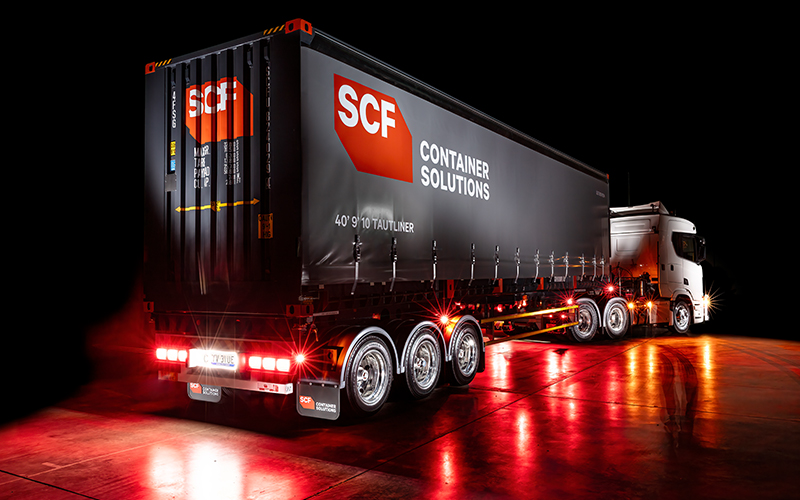
The company’s Intermodal division remains the cornerstone of the organisation. Serving predominantly third-party logistics providers, this division specialises in equipment designed to improve freight efficiency across Australia’s transport networks. Refrigerated containers, curtain-side units, and specialised Australian transport features help customers move products across vast distances while maintaining flexibility throughout the supply chain.
Alongside Intermodal sits the Tank division, a highly specialised operation focused on containerised bulk liquid and powder storage and transportation solutions. These assets support both ongoing logistics operations and static storage applications across a broad range of industries.
The diversity of this division is remarkable. SCF’s tanks are used in applications ranging from transporting liquid chocolate between states to supporting gold refining operations and carrying materials critical to industrial production.
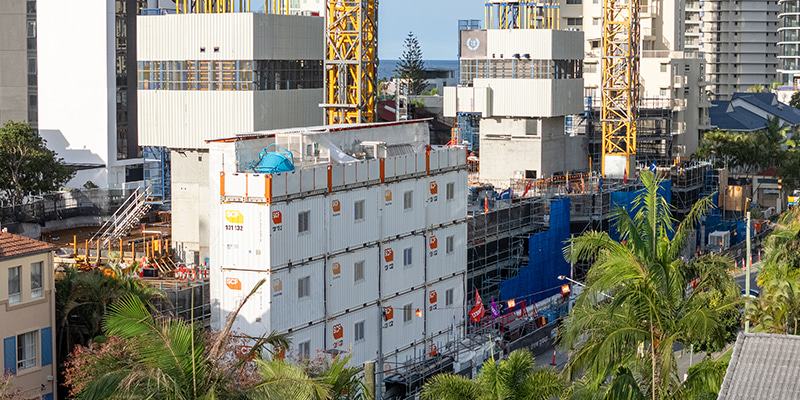
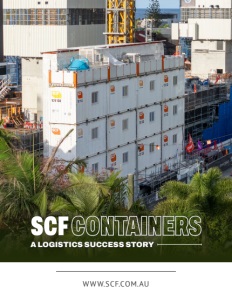
The Site division represents another important growth area, providing static storage and accommodation solutions for industries such as construction, resources, defence, and events. Modular facilities, storage units, and stackable infrastructure solutions have become increasingly valuable as projects seek greater flexibility and efficiency in constrained environments.
The fourth division emerged through acquisition. Following the purchase of CSL Containers in 2023, SCF established a dedicated New Zealand operation, creating new opportunities to introduce specialised products into a market where many solutions were previously unavailable.
Together, these divisions create a business model capable of responding to changing economic conditions while maintaining strong market diversification.
A Fleet Designed for Australia
Australia presents unique logistics challenges. Vast distances, diverse industries, and specialised freight requirements demand solutions that differ significantly from those found elsewhere in the world.
SCF has built its reputation by understanding those differences.
The company now manages more than 17,000 containers, many of which are specifically designed for Australian supply chains. Unlike standard international containers, a significant portion of SCF’s fleet is built to accommodate Australia’s pallet systems, allowing customers to maximise loading efficiency and transport capacity while maintaining the integrity of cargo.
This commitment to specialisation extends throughout the business.
Working with approximately 12 manufacturing partners in China, SCF develops purpose-built products that satisfy customer requirements and local market conditions. Rather than relying solely on standard equipment, the company invests heavily in product development to solve specific operational challenges that customers commonly experience.
That approach has produced tangible results.
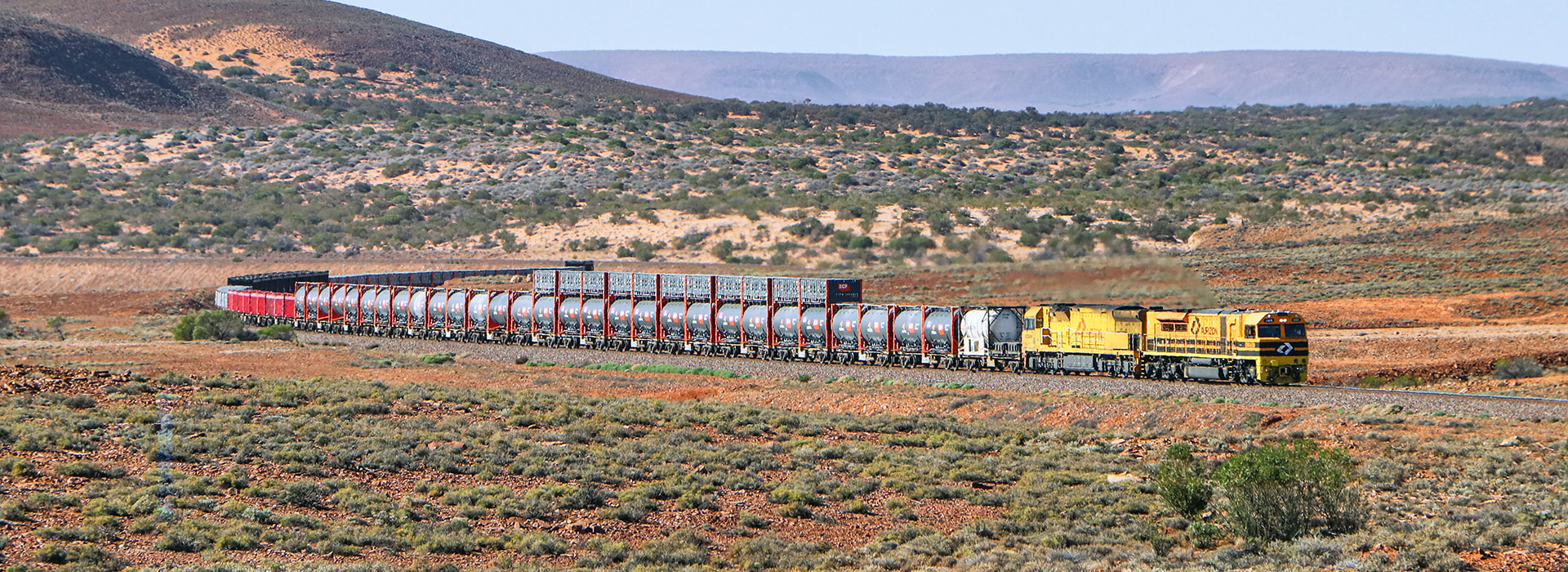
One of SCF’s most significant recent achievements involves supplying specialised equipment for one of the largest road-to-rail freight conversion projects in Australian history. Supporting mining operations associated with BHP’s Olympic Dam and Prominent Hill sites, the project utilises approximately 1,000 specialised units designed to transport materials efficiently between locations.
Innovation played a central role in securing the opportunity.
“Part of it is just trying to understand what problem they’re trying to solve and make sure that we provide them with the best solution,” says Speedy.
That philosophy has helped transform SCF from an equipment provider into a strategic partner for many of its customers.
A Culture Built on Safety and Collaboration
Behind this equipment solutions provider lies a workforce capable of managing complexity while maintaining consistently high standards.
For SCF, culture begins with safety.
Operating depots and handling specialised equipment naturally involves risk. Recognising this reality, the company has developed a strong safety culture that underpins every aspect of its operations.
“We’re very focused on safety,” says Speedy. “You can’t be a great business if you’re harming people in your business or those your business interacts with.”
This commitment extends across SCF’s network of ten depots located throughout Australia and New Zealand. These facilities serve as critical hubs for maintenance, certification, repairs and modifications, ensuring customers have access to a full service offering throughout the asset lifecycle.
Beyond safety, collaboration remains a defining feature of the organisation.
Despite operating a fleet of more than 17,000 units and employing approximately 120 people, SCF maintains a relatively flat organisational structure. Leadership accessibility, responsiveness, and customer engagement are actively encouraged throughout the business.
“We have a very collaborative culture,” says Speedy. “We’re engaged both internally and externally with customers.”
This emphasis on relationships has become a significant competitive advantage. By investing time in understanding customer objectives, SCF has developed a reputation for delivering solutions that address broader operational challenges rather than simply supplying equipment.
The result is a customer experience that consistently differentiates the company within a competitive market, which has seen many long-term customers stick with the business over multiple contracts or projects.
Navigating a Changing Logistics Landscape
The logistics industry has undergone a significant transformation in recent years, shaped by global disruptions, changing consumer behaviour, and evolving supply chain priorities.
Like many businesses servicing the logistics sector, SCF experienced substantial demand increases during the COVID-19 pandemic as supply chains faced unprecedented disruption.
As markets stabilised, conditions shifted once again.
Demand patterns became more closely tied to consumer confidence, interest rates, and broader economic activity. While some sectors have shown renewed momentum in recent months, uncertainty remains a constant feature of the operating environment.
Yet these challenges also reinforce the importance of resilience and adaptability.
Containers provide flexibility that many other transport solutions cannot match. Freight can move between rail, road, and sea depending on circumstances, helping customers adapt to disruptions and maintain continuity when traditional transport networks face pressure.
This adaptability has become increasingly valuable as businesses seek greater supply chain resilience in an uncertain world.
Investing for the Future
While fleet expansion remains central to SCF’s growth strategy, the company is increasingly looking toward technology as a key enabler of future success.
A recent ownership transition has created fresh opportunities for investment and innovation. Following years under private equity ownership, SCF is now backed by Asian Bulk Logistics, providing access to additional resources and strategic support.
Technology sits high on the agenda.
The company is currently evaluating future options for its operational systems, including potential redevelopment of existing platforms and exploration of new enterprise solutions.
Artificial intelligence also features prominently in strategic discussions.
Rather than viewing technology purely as an internal efficiency tool, SCF sees opportunities to create greater value for customers through enhanced asset management, improved visibility, and stronger operational integration.
“We see there’s an opportunity to leverage and enhance what we do with technology that ultimately benefits our customers, rather than replace internal expertise”, says Speedy.
Alongside technology investment, the organisation is also reviewing training, workforce development, and broader capability-building initiatives designed to support long-term growth.
These investments reflect a company preparing not only for immediate opportunities but also for the evolving demands of future supply chains.
Looking Beyond the Horizon
The next chapter for SCF will be shaped by both opportunity and ambition.
Each division enters the coming years with clearly defined priorities. Intermodal continues to focus on supporting road-to-rail freight conversion initiatives. Tanks is pursuing opportunities in specialised logistics and infrastructure markets. Site remains committed to expanding its presence within the construction and infrastructure sectors, while New Zealand focuses on introducing innovative product lines and building brand awareness.
At a broader level, the company is evaluating opportunities beyond its traditional geographic footprint.
Southeast Asia has emerged as a region of interest, particularly as management explores whether successful Australian operating models can be adapted to international markets. The prospect of exporting SCF’s expertise in specialised logistics solutions represents an intriguing possibility for future growth.
Underlying all of these ambitions is a belief that containers remain one of the most versatile tools in modern commerce.
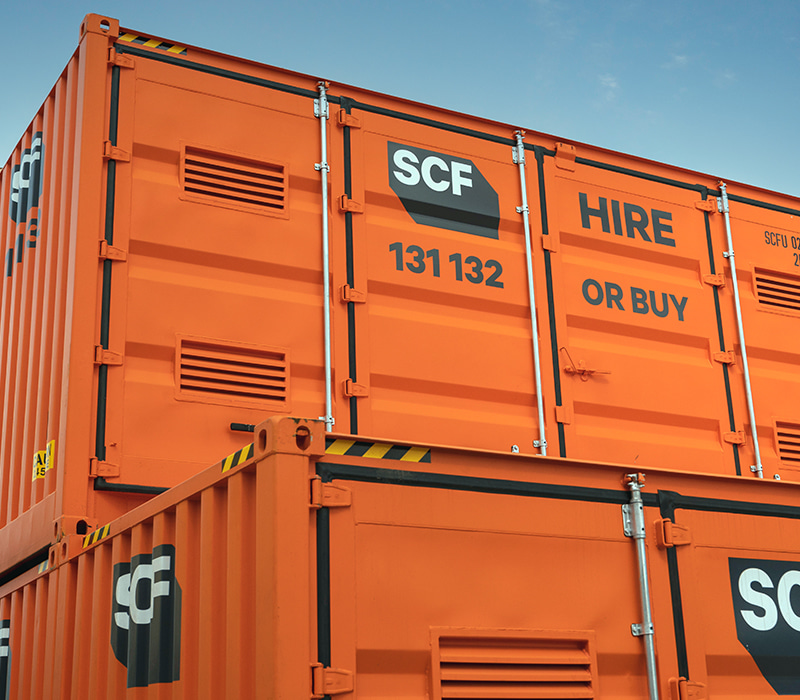
Speedy describes them as an “industrial piece of Lego,” capable of being adapted and refined to meet countless operational requirements. It is a fitting analogy for a business that has built its success on flexibility, innovation, and practical problem-solving.
As supply chains become increasingly complex and industries demand greater efficiency, the role of companies like SCF will only grow in importance.
The company may operate largely behind the scenes, but its impact is visible wherever goods move, projects advance, and industries expand. For more than 30 years, SCF has quietly enabled progress across Australia and New Zealand. With fresh investment, expanding capabilities, and an eye toward international opportunities, it is now preparing to play an even larger role in shaping the future of logistics and industrial development. As the supply chain and infrastructure landscape enters its next phase of change, SCF appears well-positioned not merely to respond to that evolution but to help drive it.
Click The Cover To View Or Download The Brochure
AT A GLANCE
Who: SCF Containers
What: Diversified equipment supply enterprise operating across multiple sectors and managing one of the region’s largest specialised container fleets.
Where: Adelaide, South Australia, Australia, with operations across Australia and New Zealand
Website: www.scf.com.au
PREFERRED VENDORS/PARTNERS
TGM Towing – www.websitename.com.au