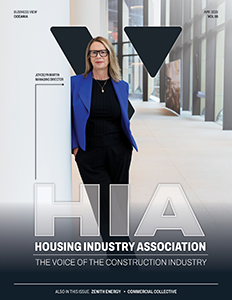

The Voice of the Construction Industry
Advocating for a Stronger Future in Residential Construction
For 80 years, the Housing Industry Association (HIA) has stood at the forefront of Australia’s residential building sector, evolving from a post-war materials collective into a powerful national advocate and industry partner. Founded in 1945 amid widespread material shortages following World War II, the organization was initially driven by a simple but critical need: ensuring builders had access to the resources required to meet growing housing demand.
Today, HIA represents approximately 20,000 building businesses and an estimated 50,000 industry professionals across the country, making it one of the most influential voices in residential construction. Its membership reflects the full spectrum of the industry, from small, family-run building firms to large-scale national developers and major suppliers supporting the sector.
At its core, HIA positions itself as both a business partner and a risk advisor for its members. Whether navigating compliance issues, interpreting construction codes, or addressing contractual concerns, members rely on the organization for authoritative guidance. In an increasingly complex regulatory environment, this support has become more vital than ever.
Beyond advocacy, HIA operates a robust training and education arm, including a registered training organization and group training initiatives. With roughly 2,500 students and up to 700 apprentices engaged nationally, the association plays a direct role in developing the next generation of skilled tradespeople. This function is particularly critical as the industry faces mounting labor and skills shortages, compounded by a declining number of young people entering traditional building trades.
The composition of HIA’s membership has also evolved. While the majority remains rooted in small businesses that build most of the nation’s homes, the sector is experiencing notable shifts. Many long-standing operators are approaching retirement, with fewer successors stepping in to continue family-run enterprises. At the same time, some large volume builders are increasingly backed by overseas investment, signaling a broader transformation in ownership structures.

Communication and engagement remain central to HIA’s national reach. While unified under a single organization, members benefit from localized representation through regional offices and committees across states and territories. These regional networks enable direct engagement through events, policy discussions, and industry forums, while also feeding grassroots insights into national advocacy efforts. This structure ensures that the organization’s voice in government and regulatory discussions is firmly grounded in real-world industry experience.
Looking ahead, HIA is embracing innovation to remain relevant in a rapidly changing landscape. One of its most significant initiatives is the development of a comprehensive AI strategy aimed at modernizing how members access information. By transforming traditionally text-heavy resources into more interactive, searchable, and digestible formats, HIA aims to enhance usability and accessibility. This includes the integration of AI tools to simplify complex compliance requirements and deliver insights in real time.
The association is also expanding its training footprint, with new Certificate III programs being rolled out beyond the Northern Territory into regions such as Tasmania and South Australia. These programs are designed to address critical trade shortages and provide practical, skills-based learning pathways for aspiring builders and tradespeople.
Despite these forward-looking initiatives, the industry continues to face significant challenges. While labor shortages remain a concern, HIA emphasizes that regulatory complexity and excessive compliance requirements are the most pressing barriers to growth. Lengthy approval processes, high land development costs, and extensive red tape are slowing the delivery of new housing and worsening affordability for consumers.
In response, HIA dedicates considerable effort to advocacy at both state and federal levels, pushing for reforms that streamline processes and reduce unnecessary regulatory burdens. The organization also anticipates ongoing national discussions around housing-related taxation, with nearly half of the cost of a new home already attributed to taxes, fees, and charges.

Internally, HIA continues to strengthen its service offerings by expanding digital tools and contract management solutions. The goal is to create more seamless, integrated systems that simplify administrative tasks for builders, allowing them to focus on delivering quality projects. In an environment where technology options can be overwhelming, HIA sees an opportunity to guide members toward effective, practical solutions.
As the association looks toward its centenary in 2045, it is actively developing a long-term strategy to ensure it remains aligned with the industry’s evolving needs. While the future may bring uncertainty, one constant remains: the enduring need for quality housing.
Ultimately, HIA’s mission extends beyond advocacy and support. It seeks to elevate the perception of the residential construction sector, highlighting the professionalism, craftsmanship, and innovation that define its members. In an industry often scrutinized for its shortcomings, HIA champions a narrative that celebrates excellence and encourages a regulatory environment that rewards quality rather than penalizing compliance.
Through its blend of tradition, innovation, and unwavering industry commitment, the Housing Industry Association continues to shape the future of residential construction—ensuring that both builders and homeowners are supported in creating communities that stand the test of time.
Click The Cover To View Or Download The Brochure

AT A GLANCE
Who: Housing Industry Association
What: Helping to shape the future of residential construction by supporting and educating its members while serving as the voice of the industry
Where: Regional offices throughout Australia
Website: www.hia.com.au